Play Groups
Published on: May 23, 2010
Montessori Play Groups: Building Community and Learning Together
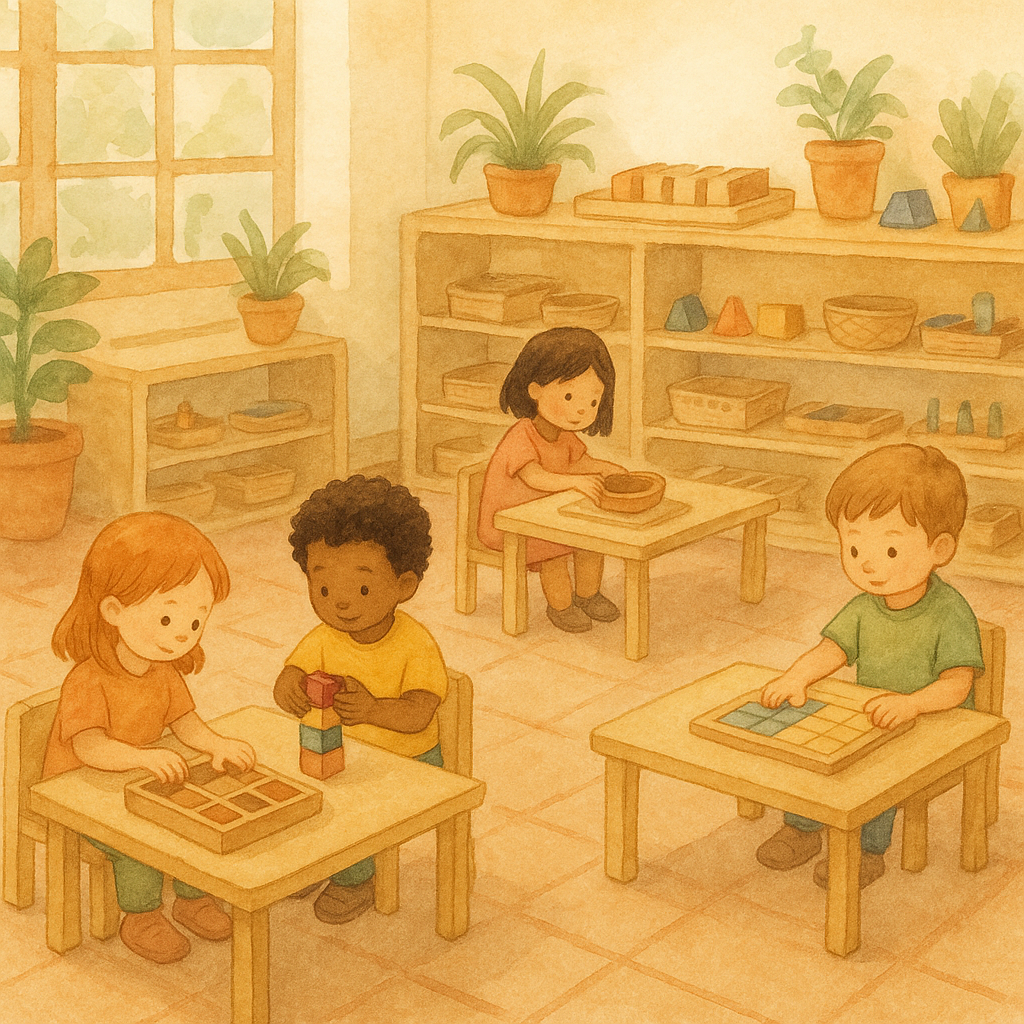
One of the most rewarding ways to enrich your child’s Montessori journey at home is by starting a Montessori play group. Whether you’re a homeschooling family seeking socialization or simply looking for meaningful, screen-free activities to share with friends, a well-organized play group offers children the opportunity to learn alongside peers in a prepared, purposeful environment. It also gives parents a wonderful community of like-minded families to lean on.
Why Start a Montessori Play Group?
Montessori play groups go far beyond typical playdates. They are intentionally structured gatherings where children engage in hands-on activities that foster independence, concentration, fine motor skills, and social grace. Here are just a few of the benefits:
- Social Development: Children practice grace and courtesy, turn-taking, and collaborative work in a mixed-age setting — just as they would in a Montessori classroom.
- Exposure to New Materials: By rotating homes, children encounter a wider variety of Montessori materials and activities than any single family might have on hand.
- Parent Education: Adults learn from one another. You might discover a beautiful way to introduce the Pink Tower or pick up new ideas for practical life work you hadn’t considered.
- Consistency and Routine: A regular weekly or biweekly gathering gives children a predictable rhythm and something to look forward to.
How to Organize and Structure Your Play Group
Starting a play group doesn’t need to be complicated. Begin by gathering three to six families with children of similar or mixed ages — mixed ages work beautifully in the Montessori approach. Decide on a regular meeting time, ideally once a week or every other week, for about one and a half to two hours.
A Simple Session Structure
- Arrival and Free Work (30–40 minutes): Set up four to six activity stations on trays or mats. Children choose their own work, moving freely between activities.
- Group Time (10–15 minutes): Gather for a song, a story, or a brief music activity. Simple instruments, movement songs, or a nature observation work well here.
- Snack (15 minutes): Prepare a practical life snack station where children pour their own water, spread their own butter, or slice soft fruit with child-safe knives.
- Outdoor Play or Art (20–30 minutes): Close with open-ended outdoor exploration or a handwork activity like threading beads, simple sewing, or watercolor painting.
Tips for Hosting and Rotating Homes
Rotating hosting duties keeps the commitment manageable and gives children the enriching experience of different environments. The host family prepares the activities for that session, while other families may bring a snack or a specific material. Keep a shared document or group chat where you plan themes and track which activities have been offered.
Activity Ideas by Age
Toddlers (12–30 months)
- Transferring with spoons and tongs
- Pouring dry beans between small pitchers
- Sorting by size with natural objects
- Simple puzzles and stacking toys
Preschool (2.5–5 years)
- Presenting new materials such as the Brown Stair or Pink Tower
- Washing dishes, folding cloths, and flower arranging
- Watercolor painting and playdough work
- Sound cylinders, color matching, and fabric sorting
Kindergarten and Beyond (5–7 years)
- Simple science experiments and nature journaling
- Introduction to the Moveable Alphabet and early reading games
- Collaborative cooking projects
- Geography or astronomy explorations
Materials You’ll Need
You don’t need to invest heavily to run a meaningful play group. A few essentials make a big difference:
- Trays: Small wooden or melamine trays to define each activity. A set of Montessori-style wooden trays is a worthwhile investment that will last for years.
- Child-size pitchers: Essential for pouring exercises and snack time. These small glass pitchers are perfect for little hands.
- Floor mats or small rugs: To define individual work spaces.
- Natural materials: Wooden bowls, shells, stones, cotton balls, and real kitchen tools.
- Art supplies: Quality watercolors, thick brushes, child-safe scissors, and heavy paper.
Building Something Lasting
The most beautiful thing about a Montessori play group is the community it creates — not just for the children, but for the parents. You’ll share resources, celebrate milestones, troubleshoot challenges, and watch your children grow together in an environment rooted in respect, curiosity, and joy. Start small, stay consistent, and trust the process. The children will show you the way.