Music
Published on: June 30, 2007
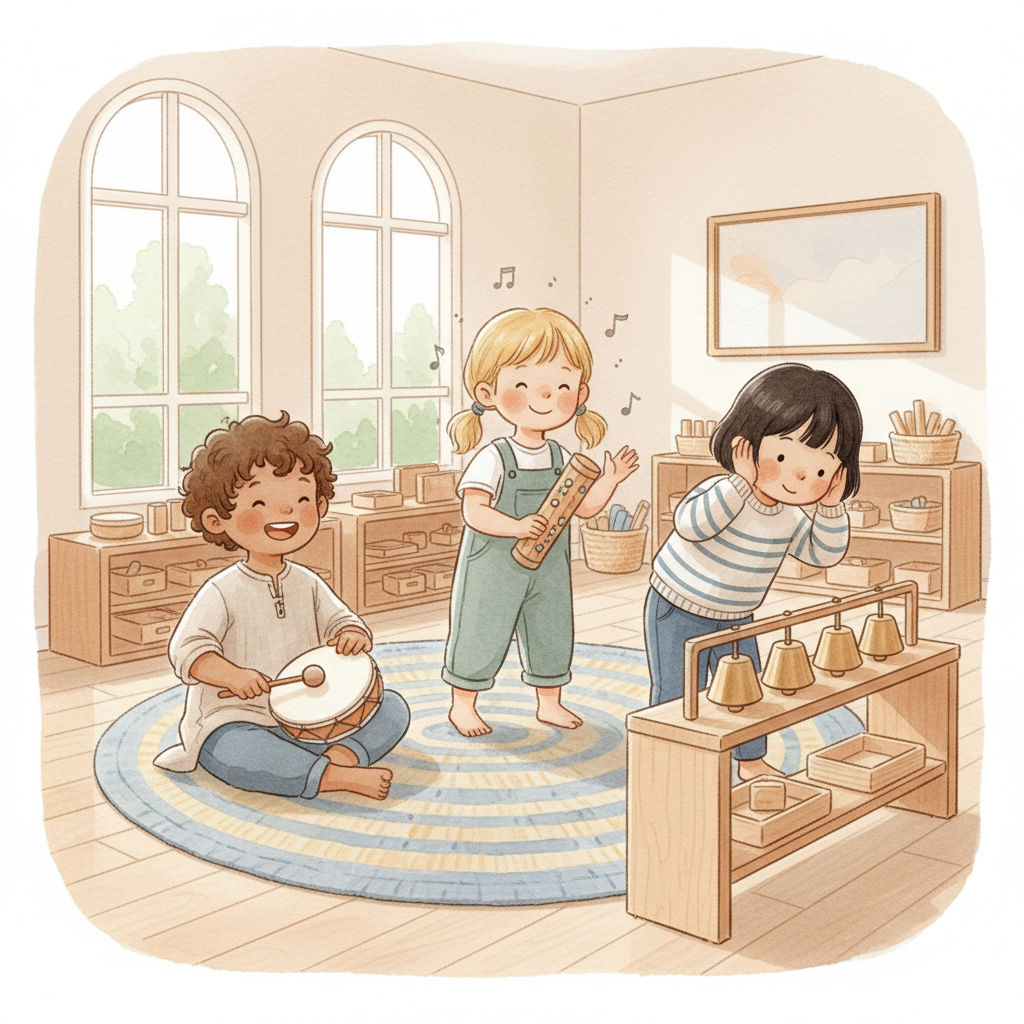
Your Child Shows Musical Talent! Here’s How to Nurture It the Montessori Way
Congratulations! Based on your quiz results, your child demonstrates a wonderful natural inclination toward music. Whether they light up when a song comes on, tap rhythms on every surface, or hum melodies throughout the day, these are beautiful signs of musical intelligence waiting to be nurtured. Montessori education has always recognized music as a vital part of holistic development, and there are so many joyful ways to support this gift at home.
Why Music Matters in Montessori Education
Maria Montessori believed that music was not a luxury or an extracurricular afterthought — it was essential to a child’s development. She observed that even very young children respond deeply to musical sounds, rhythm, and melody. Music engages the whole brain, strengthening neural pathways that support language, mathematical thinking, emotional regulation, and social connection.
In the Montessori classroom, music is woven into daily life rather than confined to a single “music class.” Children explore sounds, experiment with instruments, and move their bodies freely to rhythm. This approach honors natural curiosity and allows musical understanding to develop organically — much like the way practical life activities build independence through real, meaningful experiences.
Signs of Musical Talent in Your Child
Your quiz results likely reflect several of these common indicators of musical intelligence:
- Sensitivity to sounds: Your child notices background music, birdsong, or environmental sounds that others might overlook.
- Natural rhythm: They clap, tap, stomp, or sway to beats — sometimes creating their own rhythmic patterns spontaneously.
- Singing and humming: They frequently sing to themselves, pick up melodies quickly, or attempt to match pitch.
- Emotional response to music: Certain songs make them visibly happy, calm, or even moved to tears.
- Instrument curiosity: They gravitate toward any instrument they encounter, eager to explore how it produces sound.
- Strong auditory memory: They remember songs, jingles, and musical patterns with impressive accuracy.
If you recognized your child in even two or three of these descriptions, you have a budding musician on your hands!
Montessori Music Activities to Try at Home
Nurturing musical talent the Montessori way doesn’t require expensive lessons or complicated setups — just an environment rich in sound and the freedom to explore. Here are some wonderful activities to get started:
Sound matching and grading: A classic Montessori activity involves matching pairs of sounds or arranging them from lowest to highest pitch. A set of Montessori music bells is the traditional material for this work. Children strike each bell, listen carefully, and develop their ability to discriminate between tones.
Free instrument exploration: Create a dedicated music area where your child can freely access a variety of instruments. A quality children’s instruments set gives them the opportunity to experiment with different types of sound production.
Rhythm and movement exercises: Put on different styles of music and invite your child to move however the music inspires them. Clapping games, marching to a beat, and dancing freely all develop rhythmic awareness.
Listening activities: Introduce your child to diverse musical genres — classical, jazz, folk music from various cultures, and nature sounds.
Creating a Musical Environment at Home
- Play gentle background music during meals or quiet play times.
- Sing together throughout the day — during routines, transitions, and moments of connection.
- Keep instruments accessible on low shelves so your child can reach them independently.
- Model your own enjoyment of music, even if you don’t consider yourself musically talented.
- Attend live musical performances when possible, even informal ones at local parks or libraries.
Remember, the Montessori approach is always about following the child. Just as many Montessori families thoughtfully approach Montessori and Santa with honesty and respect, you can approach music with intentionality and joy.
Trust Your Child’s Musical Journey
Your child’s musical talent is a gift, and your role is not to mold it into something specific but to provide fertile ground where it can grow naturally. The most important thing you can do right now is simple: fill your home with music, provide real instruments to explore, and celebrate the joy your child finds in sound. Keep following your child’s lead, and watch their musical spirit flourish.