Practical Life Activities
Published on: June 11, 2012
Practical Life Activities: The Heart of the Montessori Curriculum
If you've ever watched a toddler insist on pouring their own water or a preschooler carefully sweep up crumbs, you've witnessed the magic of practical life in action. In the Montessori method, practical life activities aren't just chores — they are the very foundation upon which all other learning is built.
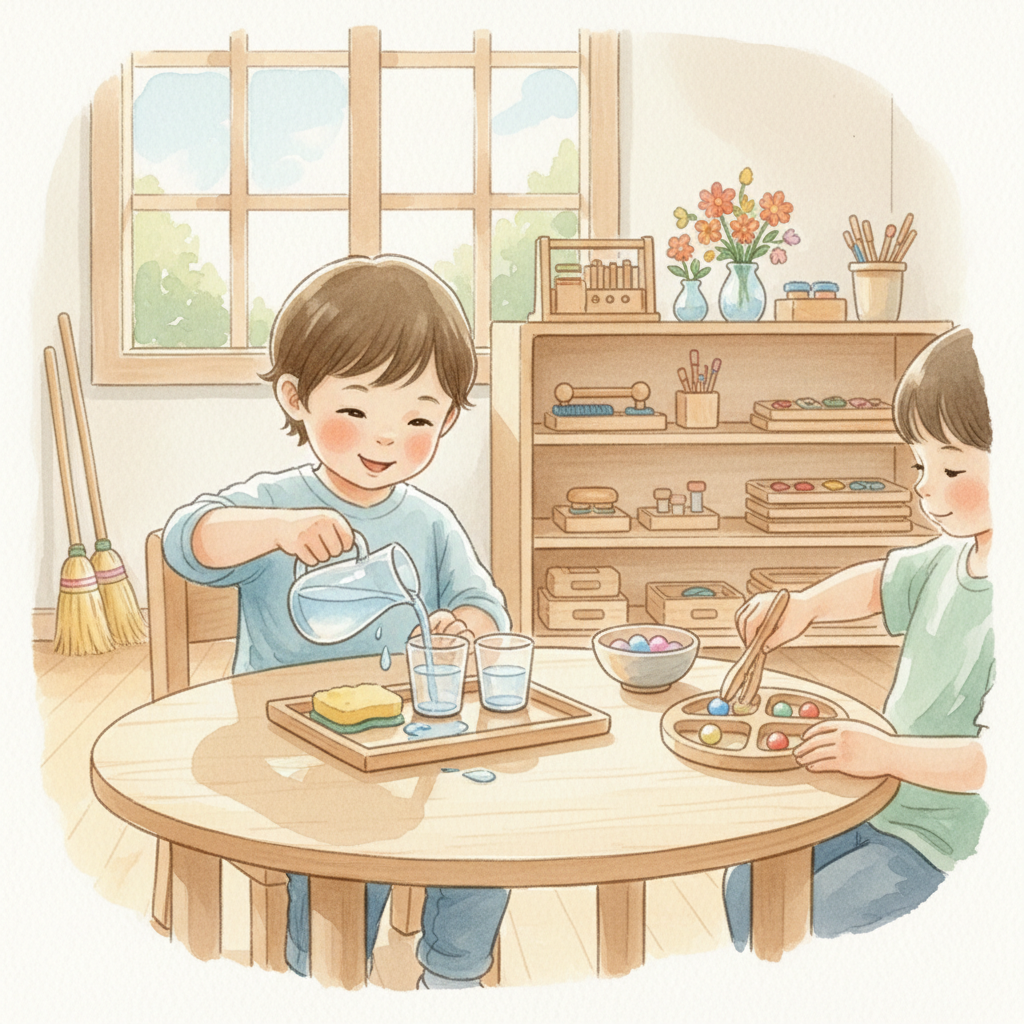
What Are Practical Life Activities?
Practical life activities are everyday tasks that children observe adults performing and naturally want to imitate. These activities fall into four main categories:
- Care of Self: Dressing, hand washing, brushing teeth, preparing snacks, buttoning, zipping, and tying shoes. Our Dressing Frames article covers the classic Montessori material for these skills.
- Care of the Environment: Sweeping, dusting, watering plants, arranging flowers, polishing, and table washing. See our Washing Up lesson for a detailed presentation.
- Grace and Courtesy: Greeting others, saying please and thank you, waiting for a turn, pushing in a chair quietly, and walking carefully around others' work.
- Control of Movement: Walking the Line, carrying objects carefully, pouring, spooning, and the Silence Game — all build coordination and body awareness.
Why Practical Life Matters So Much
Maria Montessori observed that children between ages 2½ and 6 are in a sensitive period for order, movement, and refinement of the senses. Practical life activities meet all three needs simultaneously:
- Independence: “Help me to do it myself” is the child's unspoken request. Each mastered task builds confidence and self-reliance.
- Concentration: A child pouring water from pitcher to glass is fully absorbed — building the sustained attention that later supports reading, math, and complex problem-solving.
- Fine Motor Development: The pincer grip used for spooning, tweezing, and buttoning is the same grip needed for writing. Practical life is handwriting preparation.
- Logical Sequencing: Every activity has a beginning, middle, and end. Children learn to plan steps, execute them in order, and clean up — skills that transfer to math (Golden Bead operations) and science experiments.
- Social Development: Grace and courtesy lessons teach children how to navigate social situations with kindness and awareness.
Setting Up Practical Life at Home
You don't need expensive materials to bring practical life into your home:
- Kitchen: Child-sized pitcher, small cutting board, butter knife, and a step stool. Let children help prepare snacks — spreading, slicing bananas, and pouring drinks. Our Cooking with Kids article has wonderful recipe ideas.
- Cleaning Station: A small broom, dustpan, spray bottle with water, and cloths at child height. Children love to spray and wipe tables.
- Self-Care Area: A low mirror, hairbrush, tissue box, and small towel encourage independence in personal grooming.
- Plant Care: A small watering can and a few hardy houseplants give children responsibility for living things.
A Montessori practical life materials set provides a curated collection of pouring, spooning, and transferring activities. For toddlers, a learning tower gives safe kitchen access at counter height.
The Presentation
In Montessori, we don't just hand a child a broom and say “sweep.” We give a slow, deliberate presentation — breaking each task into precise steps, performed left to right, top to bottom. The child watches, absorbs, and then repeats. For guidance on this approach, see Presenting Materials.
Practical Life for Different Ages
- Toddlers (18 months–3 years): Pouring dry materials (rice, beans), washing hands, putting on shoes, wiping tables. See Early Practical Life for age-appropriate activities.
- Primary (3–6 years): Pouring liquids, food preparation, sewing, polishing, and flower arranging.
- Elementary (6–12 years): Cooking full recipes, laundry, gardening, woodworking, and community service projects.
Practical life is where the Montessori journey begins — and its lessons in independence, order, and care for self and others last a lifetime.