Geology Printouts
Published on: May 14, 2015
Geology Printouts for Montessori Science: Rocks, Minerals, Volcanoes & More
If there’s one thing I’ve learned after years of Montessori teaching, it’s this: children are natural geologists. They pick up every rock on the sidewalk, they’re mesmerized by volcanoes, and they ask the deepest questions about what’s beneath our feet. These geology printouts are designed to meet that curiosity exactly where it lives — and give it room to grow.
What’s Included in These Geology Printouts
This collection covers the core geology topics you’ll find in a well-rounded Montessori science curriculum, thoughtfully organized so you can introduce them one at a time or as a complete unit study:
- Types of Rocks — Three-part cards and classification charts for igneous, sedimentary, and metamorphic rocks
- Common Minerals — Identification cards with key properties like color, luster, and hardness
- Layers of the Earth — Labeled and unlabeled diagrams for the crust, mantle, outer core, and inner core
- Volcanoes — Cross-section diagrams, vocabulary cards, and types of volcanic eruptions
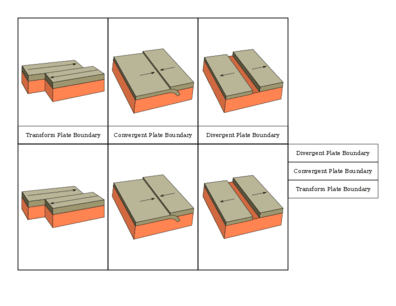
- Earthquakes — Fault line illustrations, seismic wave diagrams, and key terminology cards
- Geological Formations — Printouts covering canyons, caves, mountains, plateaus, and more
Why Geology Matters in the Montessori Classroom
Maria Montessori believed that children develop a profound sense of wonder and belonging when they understand their place in the universe. Geology is a cornerstone of her Cosmic Education approach — it connects children to the story of Earth itself. When your child holds a piece of granite and knows it formed from cooling magma deep underground, they’re not just memorizing a fact. They’re building a relationship with the world around them.
These printouts follow authentic Montessori principles: they move from concrete to abstract, they invite hands-on exploration, and they encourage independent discovery at the child’s own pace.
Practical Tips for Using These Printouts at Home
You don’t need a geology degree to make these materials come alive. Here are some simple, actionable ways to get started:
- Pair printouts with real specimens. A rock collection gives your child something tangible to match with the three-part cards. Let them sort, touch, and examine each sample with a magnifying glass.
- Start with what fascinates your child. If they’re obsessed with volcanoes, begin there. You can always circle back to rock classification later. Follow the child — always.
- Use the labeled and unlabeled versions intentionally. Introduce the labeled diagram first, then invite your child to try the unlabeled version as a self-assessment. This builds confidence without pressure.
- Create a geology shelf. Place the printouts in a tray alongside a geology kit with tools for testing hardness and streak. This invites independent exploration throughout the week.
- Extend the learning with related lessons. Once your child has explored the earthquake printouts, dive deeper with our full earthquakes geology lesson for hands-on activities and additional context.
A Gentle Reminder for Parents
You don’t have to present every printout at once. In fact, please don’t! The beauty of the Montessori approach is its unhurried pace. Introduce one topic, let your child sit with it, ask questions, and explore freely. When they’re ready for more, they’ll let you know — often by asking a question you never saw coming.
These geology printouts are tools for connection — between your child and the Earth, between curiosity and knowledge, and between you and your little learner. Spread them out on the table, grab some real rocks, and enjoy the journey together. The ground beneath your feet has never been more interesting.
Free Printables