Back-to-School Montessori Routines at Home
Published on: July 09, 2026
The end of summer has a particular feeling to it — the light shifts, the mornings cool, and the long, unstructured days start to give way to something more ordered. For young children, that shift can be unsettling or it can be a comfort, and the difference usually comes down to one thing: a gentle, predictable rhythm. In Montessori, we don't think of routines as rules to enforce. We think of them as a kind of scaffolding for independence — a dependable structure a child can lean on while they learn to do more and more for themselves.
Whether your child is heading to a classroom or learning at home, here's how to ease into fall with routines that build calm, confidence, and capability.
Why Routines Matter to a Young Child
Dr. Montessori observed that children have a deep, natural love of order. A predictable sequence of events — wake, dress, eat, go — tells a child what to expect, and that security frees up their energy for the real work of childhood: learning and growing. A good routine also quietly hands responsibility to the child. When the steps are always the same, your child can eventually walk through them without you narrating every move, and that independence is the whole point.
The secret is to make the routine the child's, not a list of instructions you deliver. Set up the environment so the right thing is also the easy thing, then step back.
A Calm Morning Rhythm
Mornings are where a little Montessori preparation pays off most. The goal is for your child to move through the morning as independently as possible:
- Dressing themselves. Lay out (or let your child choose the night before) clothes on a low shelf or in a labeled drawer. Clothing with big buttons, elastic waists, and easy fasteners invites success. This is real practical life work.
- Making the bed. A simple duvet a child can pull up counts as "made." It's a small, satisfying act of caring for their own space.
- Breakfast they help with. A child can pour cereal from a small pitcher, spread butter on toast, and carry their own plate. A step stool at the counter makes them a true participant.
- Packing the bag. Let your child load their own backpack from a checklist of pictures. Forgetting something once is a far better teacher than a reminder.
The Prepared Entryway
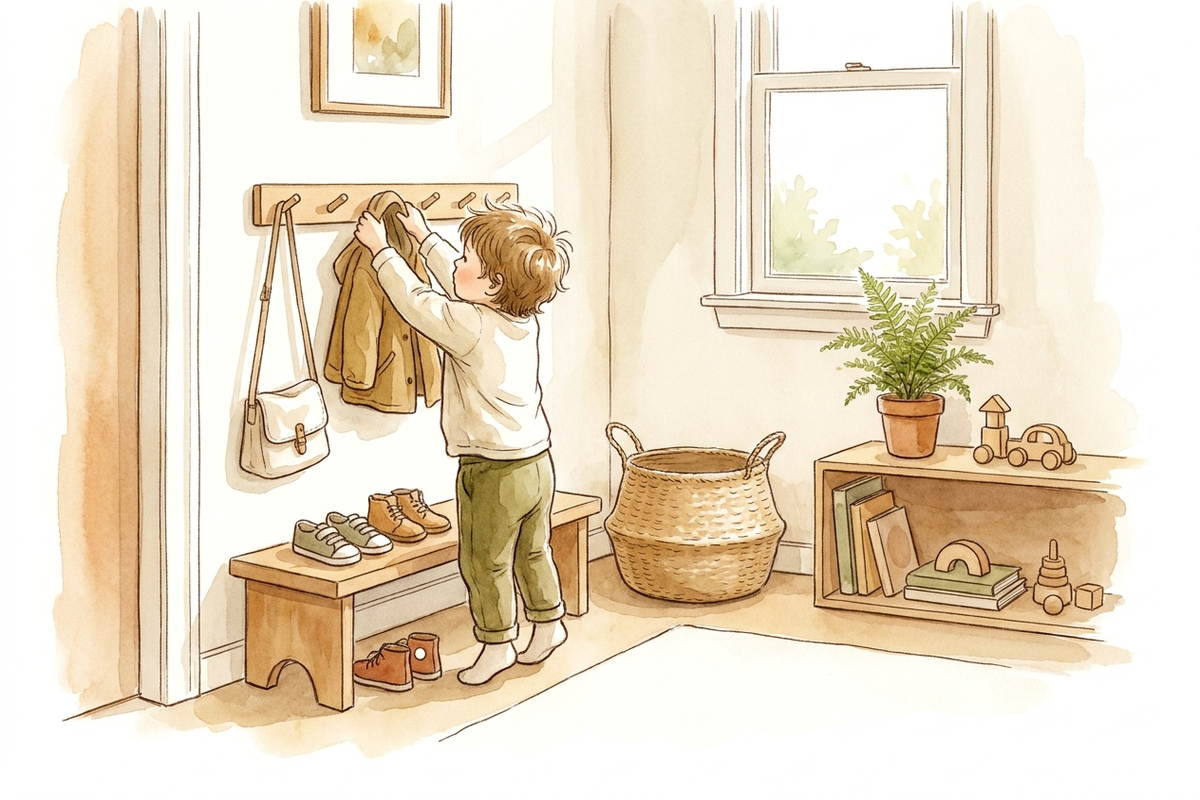
One of the kindest things you can do for a smooth morning is to prepare the environment the way we'd prepare a classroom. Give your child a low hook they can reach for their coat and bag, a basket or tray for shoes, and a small dish for the odds and ends that come home in pockets. When everything has a place — and that place is at the child's height — tidying up becomes something your child can actually do. For more on setting up child-sized spaces, see How to Prepare Your Classroom, whose principles work just as beautifully at home.
Let the Child Own the Sequence
Children thrive when they can see the plan. A simple visual schedule — a row of pictures showing dress, eat, brush teeth, shoes, go — turns the morning into a sequence your child can follow with their eyes instead of their ears. As they finish each step, they move or flip the picture, which gives that lovely little jolt of accomplishment. You'll find yourself nagging less and watching your child self-correct more.
Fold in a little grace and courtesy too: greeting a teacher, saying goodbye, waiting for a turn at the sink. These small social routines are as important as the practical ones.
An After-School Rhythm
The end of the day deserves its own gentle sequence. Many children come home tired and full of feelings, so keep it simple and predictable:
- Hang up the coat and bag, and empty the lunch things into the sink.
- A snack the child helps prepare — slicing a banana with a safe knife, pouring water.
- Unstructured outdoor time to move and decompress. A little walking the line or a run in the yard resets the nervous system.
- A stretch of quiet, self-chosen work — drawing, building, handwork, a puzzle — before dinner.
Winding Down for Tomorrow
An evening routine that ends the day the same way each night helps a child settle. Tidy up the day's work together, choose tomorrow's clothes, set out the backpack by the door, and close with a book. The predictability itself is soothing — your child knows exactly what comes next, and so bedtime stops being a negotiation.
A Few Gentle Reminders
Go slowly. A routine isn't built in a day; it's practiced, cheerfully, until it becomes the child's own. Expect it to take longer at first — a child who ties their own shoes is learning something a rushed adult would rob them of. And keep your own tone calm; children borrow our nervous systems. If a morning falls apart, that's information about the environment, not a verdict on your child. Adjust the setup and try again tomorrow.
A Few Things That Help
You truly don't need much — but a couple of simple tools can make the routine visible and the child capable (these are affiliate links; they help support the site at no cost to you):
- A magnetic visual routine chart — picture cards for morning and bedtime steps that your child can move to "done," turning the sequence into something they can follow themselves.
- A sturdy two-step wooden stool — so your child can reach the sink and the counter to wash hands, brush teeth, and help with breakfast independently.
Back-to-school season is really an invitation: a chance to hand your child a little more responsibility and watch them rise to it. Prepare the environment, keep the rhythm steady, and then trust your child to do more than you'd expect. That, in the end, is the whole Montessori promise — help me to do it myself.