Alphabet Phonetic Sounds — Teaching Montessori Letter Sounds A to Z
Published on: May 27, 2012
Montessori Phonetics: A Guide to Teaching Letter Sounds
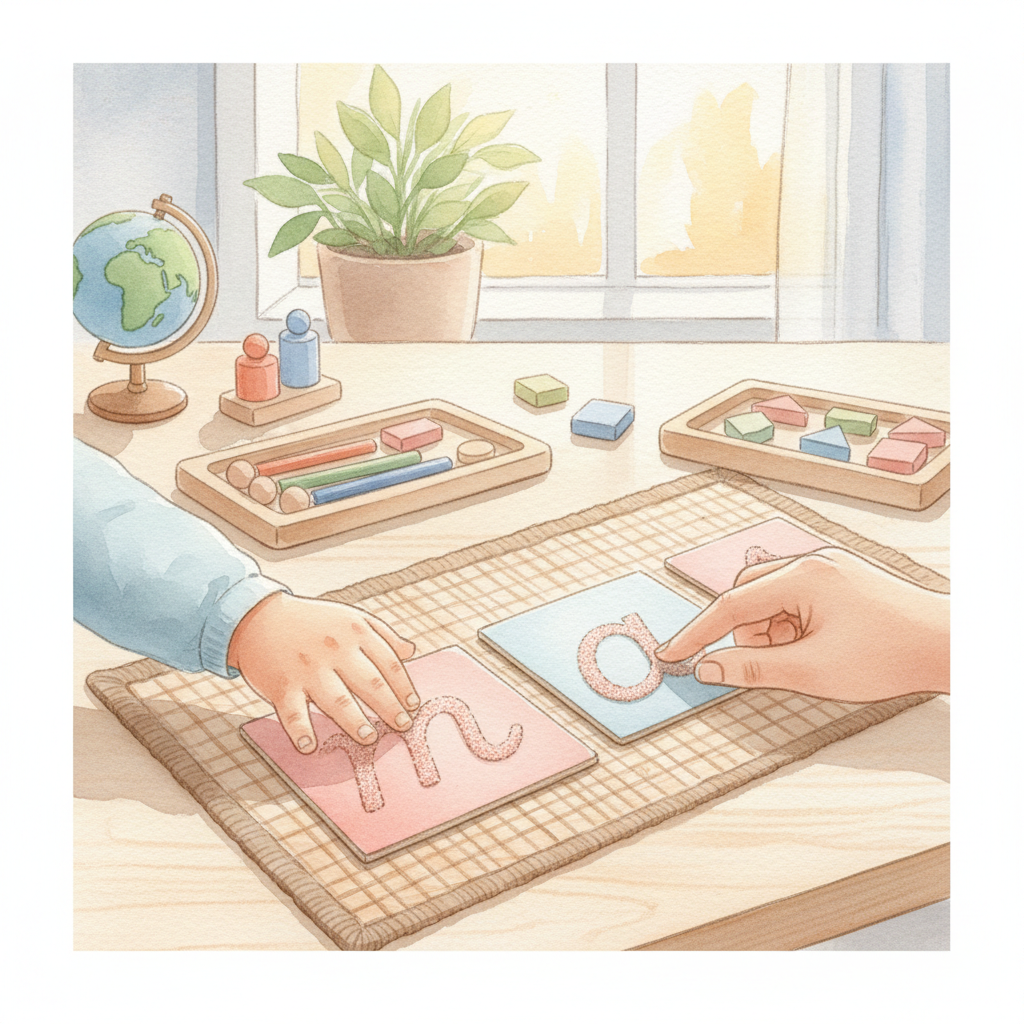
Learning the phonetic sounds of the alphabet is a foundational step in your child's journey toward reading and writing. In the Montessori approach, we introduce these sounds carefully and precisely, giving children the tools they need to decode language with confidence. Whether you're a parent working at home or a teacher in the classroom, this guide will walk you through each letter sound from A to Z.
Introducing the phonetic sounds of the alphabet is one of the first steps in teaching spelling. Use either alphabet cards (sandpaper) or lower case letters. In Montessori classrooms, the sounds are first taught in lower case because most text writing is done this way. It makes the transition to reading much easier. Many children already know the names of the alphabet, as well as the upper case letters. I usually practice the sounds before I introduce them to preschool children, because if you have a tainted sound, your student will pick that up instead of the correct sound.
Materials
You will need a set of Sandpaper Letters to present these sounds. The tactile experience of tracing the letters while hearing the sound is central to the Montessori method. Here are two excellent options:
- Kid Advance Montessori Lower Case Sandpaper Letters w/Box — a well-made set with a convenient storage box
- Elite Montessori Lower and Capital Case Sandpaper Letters — includes both lower and upper case letters
You can also download our free printable Montessori sandpaper letters to make your own at home.
Exercise
Take out 2 or 3 different distinct letters and sounds. For example, I usually avoid introducing "p" "b" and "d" together. They look very similar. Also, sounds like "v" and "f" are difficult to distinguish. Use the three period lesson to introduce the sounds. When you do the first introduction almost immediately go to the second step of the "Show me" stage.
Phonetic Sounds A Through Z
The sound at the end of a word is easier to hear. You can hear the true sound of "b" at the end of the word "rib" whereas, the word "bog" may add a "bah" vowel sound to your "b". Only introduce the letter sound at first.
Introduce the short vowels and hard consonant sounds.
a — short "a" as in "at" (later teach long "a" sound such as in "gate" — "ah" sound as in "father")
b — as in "rib" — With lips closed form a line and say sound.
c — "k" sound as in "cat" (later the "s" sound as in "cent")
d — as in "lid" — Place tip of tongue behind upper front teeth, keeping face still, say sound.
e — short sound as in "egg" (later long sound such as in "me")
f — as in "if" — Put upper teeth on lower lip and release air.
g — hard sound as in "big" (Later introduce "j" sound as in "gem")
h — as in "her" — Open mouth and blow out sound.
i — short sound as in "pig" (Later introduce the long sound "i", as in "pie")
j — as in "jam" — Keep jaw still and say sound.
k — as in "ink"
l — as in "lad" — Place bent tip of tongue under front teeth and say sound.
m — as in "him" — Close lips and make sound.
n — as in "tan" — Place tip of tongue against the roof of your mouth and say sound.
o — short sound as in "on" (later introduce the long o as in "open", then introduce the long "oo" sound, as in "to")
p — as in "yap" — Close lips lightly together and say sound.
q — I introduce q with the u ie "qu" and explain that u is always with q but the u doesn't say a sound when it is with q. Word sound as in "queen" (Place tongue in middle of upper plate and release breath.)
r — as in "brr" — Pull back the tongue edges to the back molars towards upper mouth. Hold and say sound. This one is a bit difficult. I had to practice not to say "er" sound.
s — as in "gas" — Place tongue behind lower teeth, bite down and say sound. (Later teach the "z" sound as in "as")
t — as in "bat" — Put tongue behind top teeth and release breath.
u — short sound as in "up" (Later long u as in "unicorn" and short oo sound as in "put")
v — as in "vine" — Place upper teeth gently on lower lip and vibrate sound.
Let the children feel your lips with certain sounds, such as "v" and "f" since the sounds are easily confused.
w — as in "wag" — Slightly pucker your lips, release your breath and say the sound keeping lower jaw still.
x — as in "fix" — This has a ks sound (blended)
y — as in "yarn" — Do the consonant first, which is always at the beginning of a word. (Later introduce the "e" sounding y, such as "holly", vowel long "i" sounding y, such as "my" and the vowel short "i" sound such as "gym")
z — as in "zip" — Clench teeth together and make sound.
Tips for Practicing
In the beginning I used to practice in front of a mirror to get the sound correct. Find a partner and take turns introducing the more difficult sounds.
Free Printout
Download our free Montessori sandpaper letters printout to create your own set at home. You can also visit our Sandpaper Letters page for more information on making and using these materials.
Next Steps
Once your child has mastered the individual phonetic sounds, you're ready to move forward! Here are some wonderful next steps on the Montessori reading journey:
- The Moveable Alphabet — Begin building words with individual letter tiles
- Pink Reading Scheme — Start reading three-letter phonetic words
- Phonogram Words — Explore letter combinations that make new sounds
- Montessori Reading — An overview of the full Montessori reading approach
Remember, patience and consistency are key. Every child learns at their own pace, and the beauty of the Montessori approach is that it respects that individuality. Keep the lessons short, joyful, and pressure-free — and you'll be amazed at how naturally your child begins to connect sounds with letters and words. Happy teaching!