Reading Command Cards
Published on: May 28, 2012
Reading Command Cards
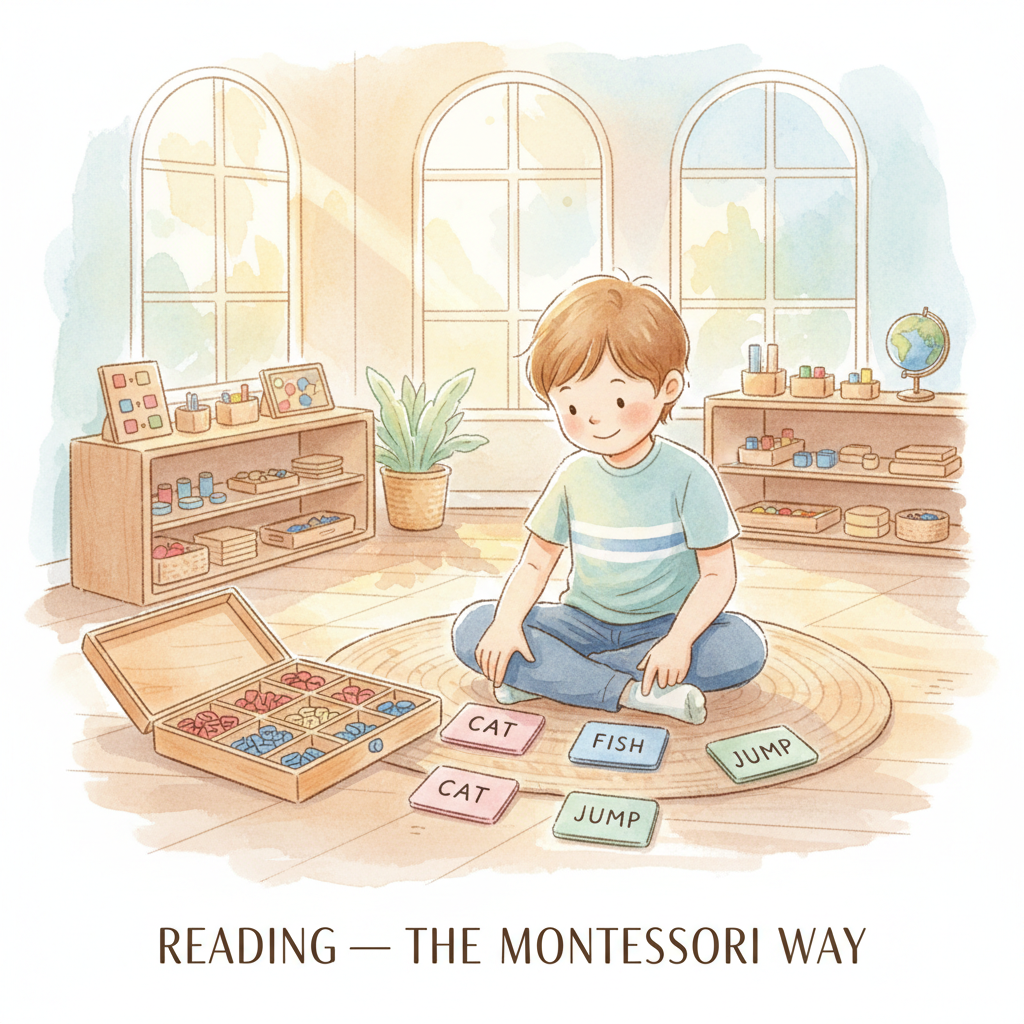
There's something truly magical about the moment a child realizes that those little symbols on a page actually mean something. And with Montessori command cards, that meaning jumps right off the card and into their whole body! If you're looking for a joyful, active way to help your beginning reader practice their decoding skills, command cards are an absolute treasure.
Command cards are one of my favorite Montessori reading activities because they bridge the gap between reading a word and truly understanding it. Your child reads a single action word — like “jump,” “clap,” or “sit” — and then acts it out. It’s reading brought to life, and I promise you, the giggles that follow are worth every moment of preparation.
Age
Command cards are typically introduced around ages 4 to 6, once a child has begun blending sounds together and can read simple phonetic words. If your child has been working with the Moveable Alphabet and is comfortable sounding out three- and four-letter words, they’re likely ready for this activity. There’s no rush, though — follow your child’s lead and introduce command cards when reading feels exciting rather than frustrating.
Materials Needed
- A set of command cards, each featuring a single action verb written in lowercase pink or red letters (you can make your own or purchase a Montessori Reading Blocks & Flash Cards Set)
- A small basket or tray to hold the cards
- Enough open space for your child to move freely
When choosing or creating your cards, start with simple phonetic words like “hop,” “run,” “sit,” “clap,” “spin,” and “nod.” If you’ve been working through the Pink Reading Scheme, many of these words will already feel familiar to your child.
Presentation
Here’s how to introduce command cards to your child, step by step:
- Invite your child to the activity by saying something like, “I have a really fun reading game for us to try today!”
- Place the basket of cards on a table or mat. Let your child see that there are several small cards inside.
- Model the activity first. Take one card from the basket, read it aloud slowly while pointing to each sound, and then perform the action with enthusiasm. For example, read “jump” and then jump! Smile and show your child how much fun this is.
- Invite your child to choose a card. Encourage them to sound out the word at their own pace. Give them time — resist the urge to help too quickly.
- Celebrate when they act it out! A warm smile or a simple “You read that all by yourself!” goes a long way.
- Continue with additional cards for as long as your child remains interested and engaged.
- When finished, invite your child to return the cards to the basket and place it back on the shelf.
The beauty of this activity is that you’ll know your child has truly read and understood the word because they demonstrate it physically. There’s no guessing involved — their body tells you everything.
Extensions
Once your child is confidently reading single command cards, you can extend the activity in wonderful ways:
- Introduce two-word commands like “walk slowly” or “clap fast” to build reading fluency
- Let your child write their own command cards using the Moveable Alphabet and have a sibling or parent act them out
- Create a command card treasure hunt by hiding cards around the room for your child to find, read, and perform
- Gradually introduce longer phrases and sentences as your child’s reading ability grows
- Pair command cards with Spin-and-Read Montessori Phonetic Reading Blocks that include a wider variety of action vocabulary
Free Reading Printouts
Download these free printable reading cards to use alongside your command card work:
- Reading Cards Printout — a ready-to-print set of word cards for early readers
- Pink Series Reading Cards (Set A) — short-vowel phonetic words to build decoding confidence
- Blue Series Reading Cards (Set A) — blends and longer phonetic words for the next step
Related Lessons
Command cards fit beautifully into the broader Montessori reading sequence. If your child is enjoying this work, consider exploring these related activities:
- Free Montessori Sandpaper Letters Printout — for reinforcing letter sounds
- Phonetic Word Lists — for building a strong decoding foundation
- How to Make Reading Cards — for creating your own custom materials
- Reading Object and Picture Boxes — another hands-on reading activity your child will love
Command cards remind us of something so central to the Montessori philosophy: children learn best when their minds and bodies are engaged. So spread those cards out, make some space, and get ready to watch your little reader jump, spin, and clap their way to confidence. Happy reading, friends!