Praise in the Montessori Classroom
Published on: June 11, 2012
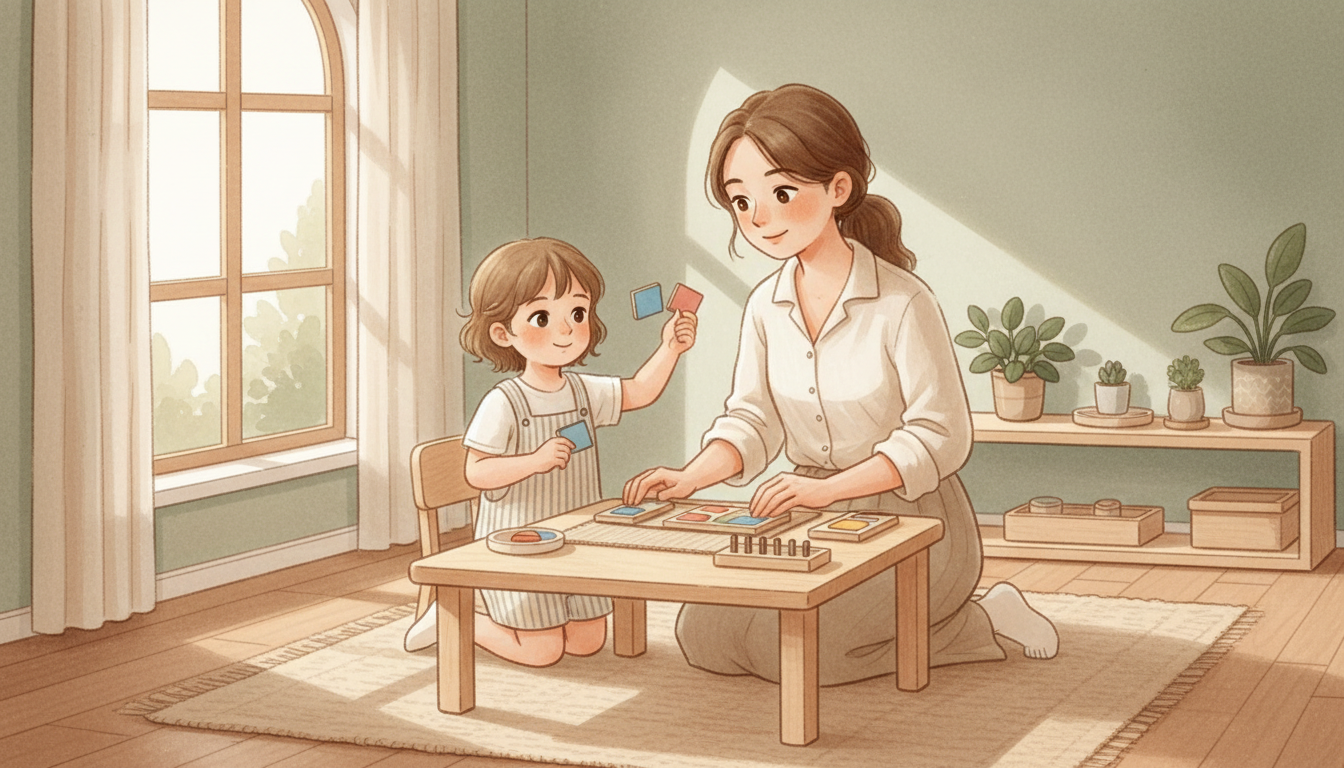
Praise in the Montessori Classroom
How we respond to a child’s work matters deeply. In the Montessori approach, we encourage children by acknowledging their effort and process rather than offering empty praise.
Descriptive vs. Evaluative Praise
Instead of saying “Good job!” try describing what you see:
- “You carried that tray all by yourself without spilling!”
- “I notice you matched all the color tablets correctly.”
- “You worked on that puzzle for a long time and figured it out.”
This kind of feedback helps children develop intrinsic motivation — they learn to take satisfaction in the work itself, not in pleasing adults.
Encouraging Independence
When a child shows you their work, try asking questions instead of judging:
- “Tell me about what you made.”
- “How did you decide to do it that way?”
- “What was the hardest part?”
Simple Swaps You Can Start Using Today
Shifting from evaluative to descriptive praise can feel awkward at first — I know it did for me! But once you get the hang of it, it becomes second nature. Instead of "Good job!" when your child finishes a puzzle, try "You found where every single piece goes. I noticed you kept trying even when that corner was tricky." You're describing what you actually see, and that reflection is so much more meaningful to a child than a generic label. You're telling them: I see you. I notice your effort. That's incredibly powerful.
Why This Matters Beyond the Classroom
Descriptive feedback nurtures something Montessori education treasures deeply — intrinsic motivation. When children learn to evaluate their own work rather than relying on an adult's approval, they develop a confident inner voice. You can extend this practice during practical life activities too. When your child sets the table, instead of "Beautiful!" try "You remembered a fork, a plate, and a napkin for every person." At the art shelf, you might say, "I see you used so many shades of blue — tell me about your painting." These small moments of genuine observation build trust, self-awareness, and a love of learning that comes from within. Give yourself grace as you practice, sweet friend — you're growing right alongside your child.
Recommended Reading
- Unconditional Parenting by Alfie Kohn — explores why praise can undermine motivation
- The Absorbent Mind by Maria Montessori
Related Articles
Related Articles
- Lesson of the Day 31: Sprouts and Grow It Again — Gardening Science for Kids
- Lesson of the Day 39: Sea Glass and Tides — A Beach Science Adventure
- Lesson of the Day 38: From Concrete to Abstract — How Montessori Math Works
Putting Descriptive Praise Into Practice at Home
Shifting from evaluative to descriptive praise takes conscious effort, but it quickly becomes second nature. The key is to narrate what you actually observe rather than passing judgment. Instead of saying “Good job on that tower!” try “You stacked twelve blocks and balanced that last one very carefully.” This tells your child exactly what they accomplished and lets them feel the pride internally rather than seeking your approval.
Here are some everyday swaps you can start using today:
- Instead of: “Beautiful painting!” Try: “I notice you used three different shades of blue, and you filled the entire page with color.”
- Instead of: “You’re so smart!” Try: “You kept working on that puzzle even when it was tricky, and you figured it out.”
- Instead of: “Good boy/girl!” Try: “You put your shoes on the shelf all by yourself. That keeps our entryway tidy.”
- Instead of: “I’m so proud of you!” Try: “You should feel really proud — you practiced that every day this week.”
Notice how descriptive praise naturally directs attention back to the child’s effort, choices, and process. This aligns beautifully with the Montessori principle of intrinsic motivation. Maria Montessori observed that children who develop an internal sense of satisfaction become more persistent, more creative, and more willing to take on challenges.
Age-Appropriate Considerations
For toddlers (ages 1–3), keep your observations simple and immediate: “You poured the water into the cup” or “You zipped your jacket.” At this age, a warm smile paired with a factual statement is incredibly powerful. For preschoolers (ages 3–6), you can add more detail about their problem-solving process: “I noticed you tried three different ways before you found one that worked.” School-age children benefit from reflective questions alongside descriptive feedback — try asking, “What part of that project are you most pleased with?” This invites self-assessment, a skill that will serve them for a lifetime.