My child doesn't want to use sandpaper letters
Published on: June 30, 2007
My Child Doesn't Want to Use Sandpaper Letters — What Can I Do?
My daughter doesn't want to do the sandpaper letters, but is very interested in writing. What can I do instead?
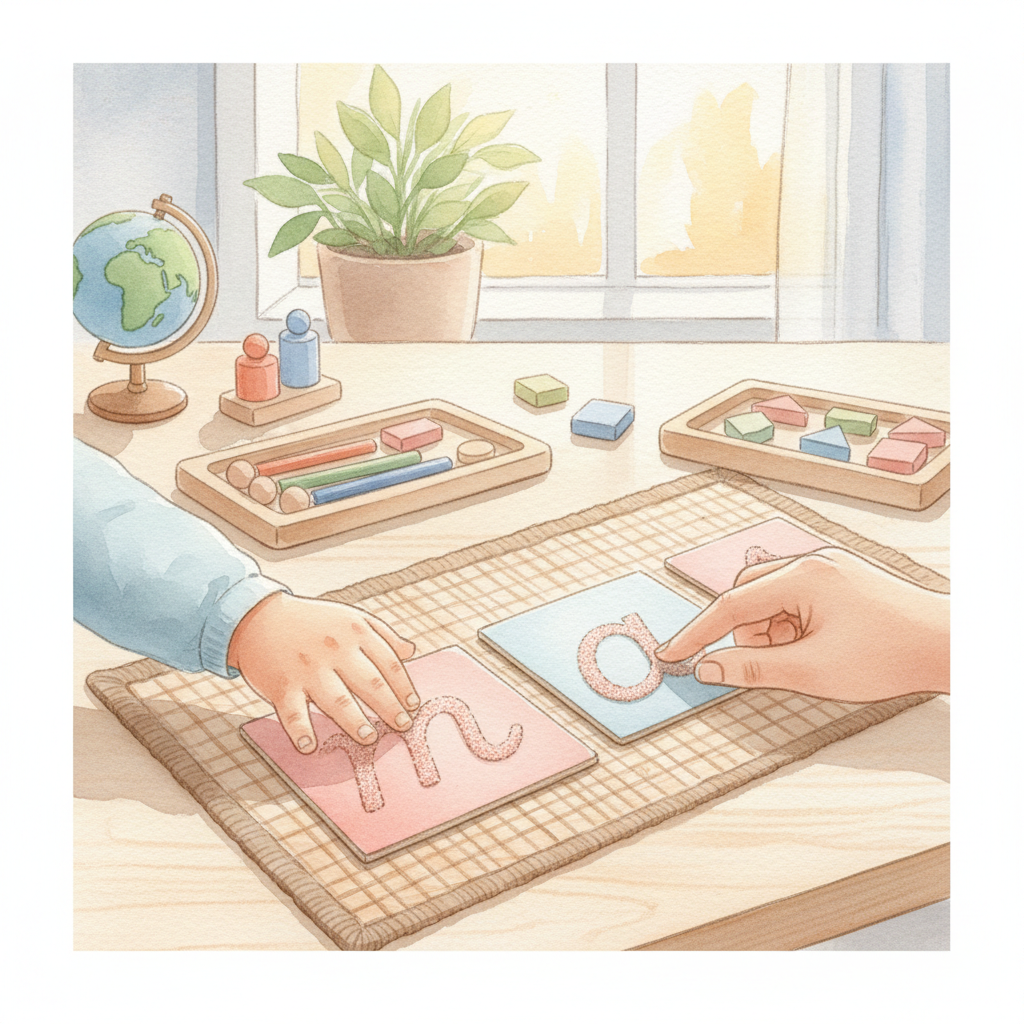
Sandpaper letters are one of the most beloved Montessori language materials — they teach letter shapes and phonetic sounds through the sense of touch. But here is the wonderful thing about the Montessori approach: we follow the child. And some children simply do not enjoy the rough texture of sandpaper letters, and that is perfectly all right.
Why Some Children Resist Sandpaper Letters
There are several reasons a child might not take to this material:
- Tactile sensitivity — Some children are naturally more sensitive to rough textures and find sandpaper uncomfortable.
- Readiness — The child may not yet be in the sensitive period for letter formation, even if she shows interest in writing as a whole.
- Preference for movement — Some children learn best through large motor movements rather than the fine tracing motion sandpaper letters require.
Alternative Approaches to Try
I would recommend that you let your child lead the way with her particular learning style. If your child feels tired or bored with the sandpaper letters, just let it go for now. Here are some wonderful alternatives:
- Pudding or sand tracing — Spread chocolate pudding or a thin layer of sand on a tray and let her trace letters while you make the phonetic sounds together. This gives the same multi-sensory experience with a texture she may prefer.
- Salt or sugar tray — A wooden letter tracing tray filled with fine salt or colored sand provides a satisfying tactile writing surface.
- Chalkboard letters — Let her write with chalk on a small chalkboard. The slight resistance of chalk on slate mimics the sensory feedback of sandpaper letters.
- Letter stamps and stencils — These allow letter exploration through a different modality.
- The Moveable Alphabet — Once your child knows enough letter sounds to form simple words, the moveable alphabet lets her build words without needing to write them by hand yet.
When to Introduce the Moveable Alphabet
Your child certainly does not need to know all the letters before starting with the moveable alphabet. Introduce consonants and vowels a few at a time — b, a, t, c, for example — and she can begin spelling simple words like "bat," "cat," and "mat." This gives her the joy of writing while her fine motor skills continue to develop.
The Key Principle: Follow the Child
It is important not to skip developmental steps, but some children need encouragement through gentle adaptations to the method. Dr. Montessori herself reminded us that the child's interest is our greatest guide. If your daughter is drawn to writing, honor that impulse — just find the path that feels right for her hands and her heart.