How to Make a Butterfly Garden
Published on: June 30, 2007
By planting the right flowers — cone-shaped and clustered blossoms — and keeping your birdbath full of water (butterflies will drink from a birdbath, too), you can turn a corner of your yard into a garden full of butterflies. It is one of the simplest ways to bring the Montessori ideas of observation, botany, and care of the environment outdoors.
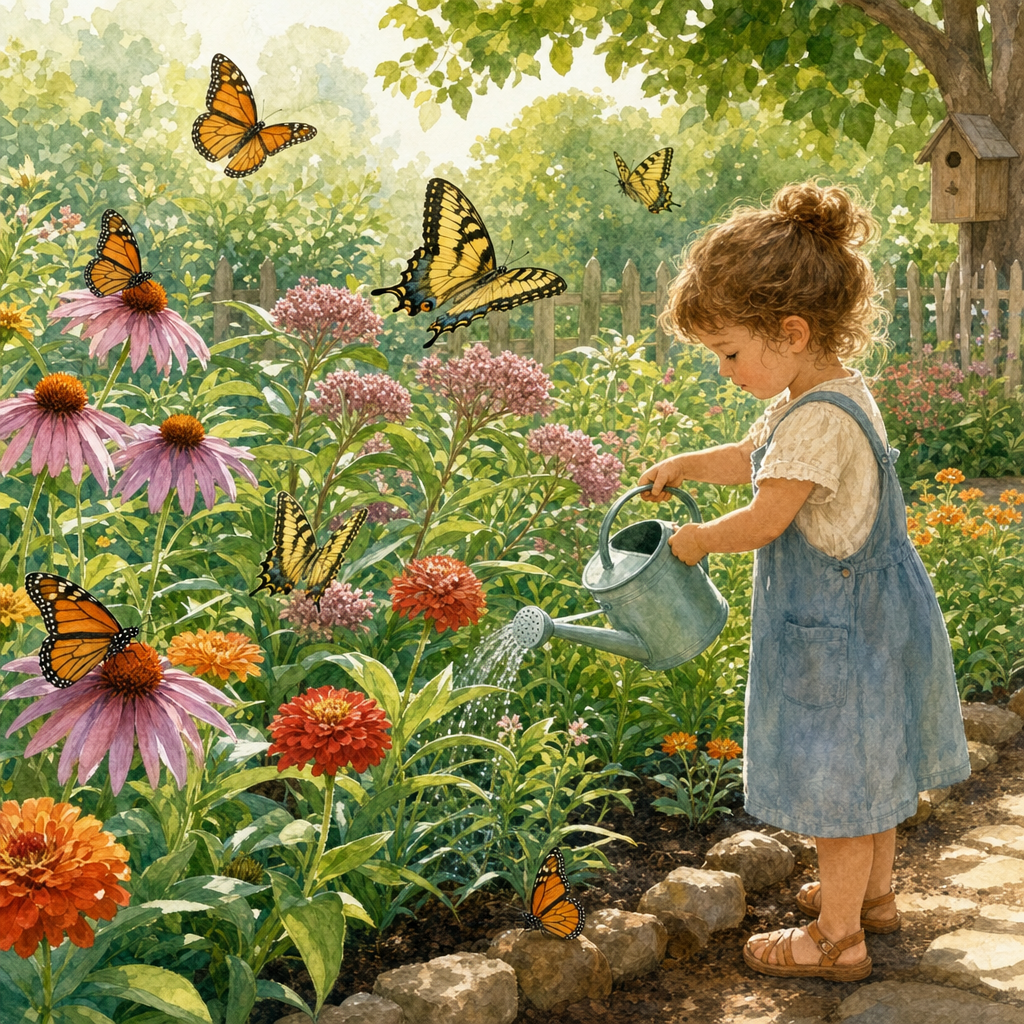
Flowers and plants that attract butterflies
Butterflies are drawn to bright, nectar-rich blooms. A simple butterfly & hummingbird wildflower seed mix is an easy way to start, or plant a few of these favorites:
- Onion chives (purple blossoms)
- Snapdragons
- Asters
- Phlox
- Clover
- Alfalfa
- Daisies
- Impatiens
- Lilacs
- Honeysuckle
- Butterfly weed
- Butterfly bushes
- Cosmos
- Dandelions
- Nasturtium
- Zinnias
- Bachelor buttons
You can plant these in pots, flower boxes, or straight into the garden. Butterflies also love pieces of melon set out on a dish. Reduce or eliminate insecticides and herbicides so the visitors stay safe. For a longer-lasting splash of color, a hardy flowering perennial gives pollinators something to return to year after year. In no time you will have lots of butterflies.
Make stepping-stone pavers together
Place pavers in the garden so your child can follow a path to observe the flowers, insects, and birds — a wonderful real-world practical-life and sensorial activity.
Materials needed:
- Foil pie tins
- Quick-setting cement (one small bag)
- Shells, marbles, and small memorabilia
This is a great outdoor activity. Set the foil tins out on newspaper. Follow the directions on the cement, then quickly pour it into the tins. Let your child decorate with favorite objects — you can even write in the wet cement with a stick. Once dry, remove the paver from the foil and place it in your butterfly garden.
Free printouts
More butterfly activities
- The Life Cycle of the Swallowtail Butterfly — free reading printouts
- Life Cycle Reading Cards