Handwork and Art in Montessori
Published on: June 01, 2012
Handwork and Art in the Montessori Classroom
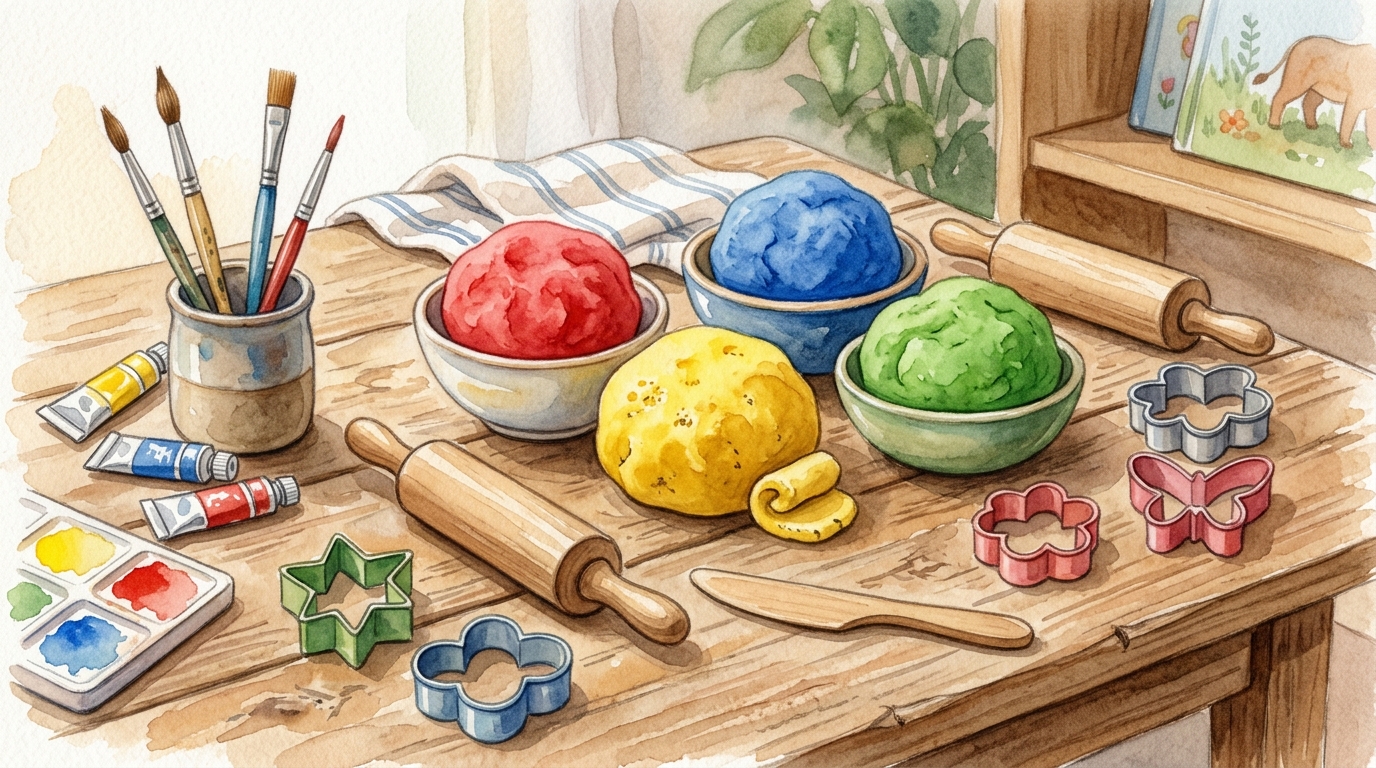
When I was taking my Montessori training, I was surprised to learn that the word “art” was not used for the preschool classroom — “handwork” was the proper term. At first this puzzled me, but the more I understood, the more it made sense. Art has its own definition, and in many ways the handwork of young children is far superior. It’s not about creating a perfect product — it’s about the process of creation itself.
Age: 2½ to 6 years
Materials You’ll Love
- Faber-Castell Young Artist Smock — perfect for keeping little ones clean during messy, joyful work
- Crayola Washable Watercolors — a wonderful first set for exploring color and water control
- Child-Sized Blunt Scissors — real tools for real work
- Natural materials: leaves, seeds, shells, cotton balls, fabric scraps
What Makes Handwork Special
Handwork beautifully connects to so many areas of the Montessori classroom. It naturally extends from practical life activities — think of the concentration a child brings to pouring, cutting, or threading a needle. It deepens sensorial exploration as children discover texture, color, and form through their fingertips. And it even supports language arts as children build the fine motor strength and hand control they’ll need for writing.
Handwork Activities by Type
Painting
Start with large brushes and just two or three colors of washable tempera or watercolor. Show your child how to dip, wipe the excess, and make strokes on the paper. An easel is lovely but a table covered in newspaper works just as well. The key is giving your child the freedom to explore without a model to copy.
Clay and Playdough
Working with clay strengthens the small muscles of the hand — the very same muscles needed for pencil grip. Provide simple tools like a rolling pin and a dull knife for cutting. Let your child pinch, roll, and flatten at will.
Cutting and Collage
Cutting is one of the most important handwork skills. Begin with snipping short strips of paper, then progress to cutting along lines and eventually cutting out shapes. Once your child can cut confidently, introduce collage — arranging and gluing cut pieces onto a background.
Sewing and Weaving
For children around four and older, introduce simple sewing with a large plastic needle and burlap or felt. Weaving with paper strips or a simple loom builds concentration and pattern recognition. These activities connect beautifully to sensorial education through the tactile experience of different fibers.
Encouraging the Process at Home
I always encourage parents to focus on the process rather than the finished piece. Resist the urge to direct or correct. Instead, prepare a beautiful workspace with quality materials, show your child how to use the tools carefully, and then step back. Let them explore freely.
The confidence and joy that comes from handwork is truly remarkable. Your child isn’t just making something — they are building concentration, coordination, and a deep sense of capability. Trust the process, dear parents. The beauty is already there.
Related Lessons
- Practical Life Activities
- Sensorial Curriculum
- Color Nomenclature Cards — connect color work to handwork
- What is Sensorial Education?
- Language Arts — fine motor connections
- Flower Potpourri — a nature-based handwork project