Color Nomenclature Cards
Published on: March 01, 2009
What Are Color Nomenclature Cards?
If you have ever watched a young child hold up a color tablet with sheer delight, naming the shade with pride and precision, you have witnessed the magic that happens when sensorial learning meets language development. Color nomenclature cards bridge the gap between the child's growing ability to perceive and discriminate colors and their expanding vocabulary for describing the world around them.
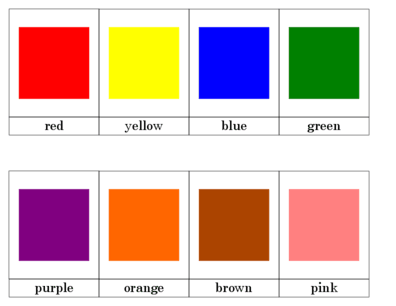
Rooted in the classic three-part card format used throughout the Montessori classroom, color nomenclature cards typically include a control card (showing the color swatch with its printed name), a picture card (showing the color swatch alone), and a label card (showing only the printed name). Together, these three components create a self-correcting activity that empowers children to learn independently.
How Color Nomenclature Cards Connect to the Sensorial Curriculum
In the Montessori method, the sensorial area helps children refine their senses and bring order to their impressions. The color tablets are one of the most beloved sensorial materials, progressing through three boxes that introduce primary colors, secondary colors, and graded shades.
Color nomenclature cards serve as an ideal extension. Once a child has had ample hands-on experience with the color tablets — matching, sorting, and grading — they are ready to attach precise language to their sensorial experiences. This follows the principle that concrete experience should always precede abstract learning, similar to how children work with the Pink Tower to internalize dimension concepts before connecting them to mathematical language.
Age Recommendations and Readiness Signs
- Ages 3–4: Begin with simple cards featuring primary and secondary colors. Focus on matching picture cards to control cards.
- Ages 4–5: Introduce cards with nuanced color names such as "lavender," "teal," "coral," and "burgundy."
- Ages 5–6: Children who are beginning to read can use the label cards independently, matching printed color names to swatches.
How to Present Color Nomenclature Cards
- Step 1: Lay out the control cards in a neat row on a mat or table.
- Step 2: Introduce the picture cards. Ask the child to match each color swatch to its corresponding control card.
- Step 3: Introduce the label cards. The child places each label beneath the correct picture card, using control cards to self-correct.
- Step 4: Mix all three sets together and invite the child to sort and reconstruct independently.
Tips for Making the Most of Color Nomenclature Cards
- Pair with nature walks: Challenge your child to spot colors they have been learning outdoors.
- Create your own cards: Paint color swatches with your child using watercolors or collect paint chips from a hardware store.
- Use quality materials: A set of Montessori color tablets with accurate color representation makes a difference. You can also explore a color matching cards set for ready-made options.
- Integrate art activities: After learning color names, invite children to use those specific colors in painting or collage work.
Why This Work Matters
Color nomenclature cards honor the child's sensorial intelligence by validating what they already perceive, and they empower the child with language — the tool that allows them to communicate their rich inner world to others. When a four-year-old looks at a sunset and says, "I see peach and violet and gold," they are demonstrating the beautiful fruit of this work: a refined sense of observation married to precise, expressive language.
Free Printable Color Nomenclature Cards
Ready to make your own set? Download our printable color nomenclature cards (PDF) to print, laminate, and cut into control, picture, and label cards for the three-part card work described above.