Geometric Cabinet Insets, Cards and Activities
Published on: June 30, 2007
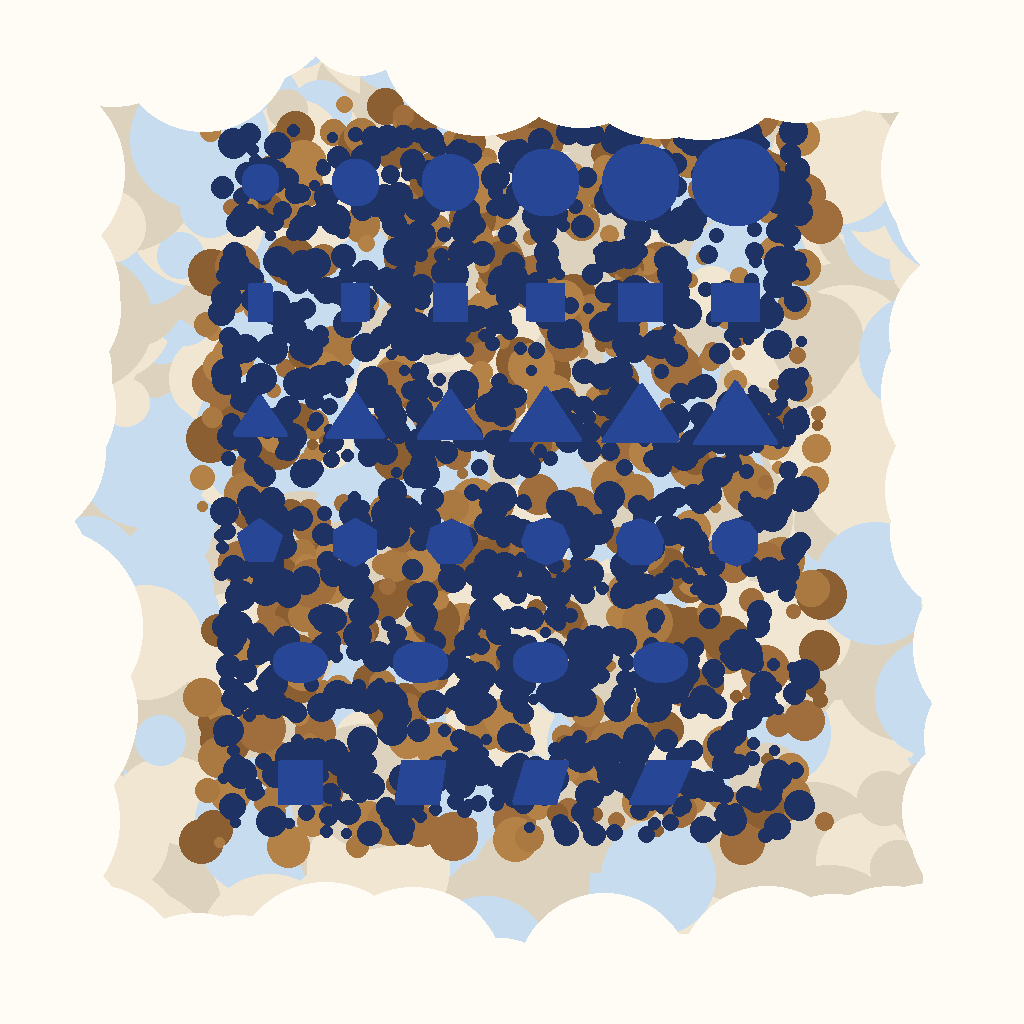
The Geometric Cabinet
I've used the Geometric Cabinet with my own children and in the classroom for years, and it remains one of the quietest little miracles in the Montessori sensorial shelf. It has been part of the materials I've gathered and written about here since 2007, and what follows is the firsthand presentation I keep coming back to — refreshed, but with all the original pedagogy intact.
Age
3 to 5 years old (the geometric cards extend the work to children 4 and up).
Purpose
- Visual and tactile knowledge of geometric forms.
- Awareness and observation of geometric forms in the surrounding environment.
- Smooth, coordinated movement — the knobs gently strengthen the pencil grip.
- Lays a foundation for the later, formal study of geometry.
- Prepares the hand for writing as the child feels the curves and straight lines of each figure — shapes that echo the letters of the alphabet and our number symbols.
- Encourages smooth hand movement and coordination.
- Helps the child transition from two-dimensional shapes toward an understanding of line.
The Material
If you'd like to bring this work home, the wooden version most families use is the Montessori Geometric Cabinet with 35 insets, which gives you the full sequence of forms in one tidy cabinet.
The Presentation Tray
A wooden tray made up of three plain squares of wood and three wooden frames, each holding one inset: a circle (10 cm in diameter), a square (10 cm by 10 cm), and an equilateral triangle (equal sides and equal angles — each of the three angles measures 60 degrees), set into a frame.
The Cabinet with Six Drawers
Each drawer holds geometric figures in dark blue that fit into a plain varnished wooden frame. The figures carry small wooden knobs, and the bottom of every drawer is painted dark blue so that a removed shape leaves a clear silhouette behind. For the complete sequence, look for the Montessori Geometric Cabinet complete 6-drawer set.
- Drawer one: Six circles arranged smallest to largest, with diameters of 5 cm, 6 cm, 7 cm, 8 cm, 9 cm, and 10 cm.
- Drawer two: Six rectangles arranged smallest to largest, with sides of 5 × 10 cm, 6 × 10 cm, 7 × 10 cm, 8 × 10 cm, 9 × 10 cm, and 10 × 10 cm.
- Drawer three: Six triangles, in this order — a right-angled scalene triangle, an acute-angled scalene triangle, an obtuse-angled scalene triangle, a right-angled isosceles triangle (with two sides of 10 cm), an acute-angled triangle, and an obtuse-angled isosceles triangle.
- Drawer four: Six polygons, each of which inscribes in the 10 cm circle from drawer one (every corner touches that circle) — a pentagon, a hexagon, a heptagon, an octagon, a nonagon, and a decagon.
- Drawer five: Four curved shapes — a curved triangle, a quatrefoil, an ellipse, and an ovoid.
- Drawer six: Four quadrilaterals — a rhombus, a parallelogram, a trapezium, and a trapezoid.
Presentation
Carry the presentation tray to the child's table. Remove each figure and set it on the blank square of wood above it, so you end up with two identical shapes of each form. Because the tray bottoms are dark blue, lifting a figure reveals a silhouette of the shape just removed.
Work slowly, pausing long enough each time for the child to take in what you are showing. Demonstrate how to feel around the edge of each inset and around its silhouette socket using the first two fingers of your dominant hand, then replace it. This tracing should be smooth, exact, and well coordinated — hold each figure very still as you feel it. Invite the child to repeat the exercise exactly as you have shown.
Exercises
Part 1
Once the child is familiar with the figures in the presentation tray, bring out new ones from a contrasting drawer of the cabinet. Replace the circle, triangle, and square with figures that look very different from one another. When the child has mastered these three as in the original presentation, offer six contrasting new figures: take them out, mix them on the table, and let the child do the presentation independently. Keep varying the shapes in the tray until the child is familiar with all the geometric insets.
Part 2
Take out one of the drawers holding similar figures that can be graded by size — circles are the easiest place to begin. Remove the shapes, mix them on the table, feel around each inset and each socket in turn, and replace every figure. The child can now choose any drawer and carry out the exercise alone. This is lengthy work, and a child will return to it again and again over time.
Advanced Lesson
Teach the names of the shapes using the three-period lesson, beginning with just three at a time. The figures can also be compared and used for simple geometrical deductions — for example, inscribing a polygon inside the largest circle, or trying to inscribe a triangle inside the largest square.
Control of Error
Most figures will not fit into the wrong sockets. If a child does place one figure in the wrong socket, there will be a leftover figure at the end that simply will not fit — and that gentle, self-correcting clue is exactly what we want.
Geometric Cards for the Geometric Cabinet
Age: 4 and up.
Material: Three sets of cards.
- Set One: White cards showing each geometric shape as a solid dark blue figure — one card for every figure in the cabinet.
- Set Two: White cards showing each shape as a thick dark blue outline (about a 1 cm line) — one card per figure.
- Set Three: White cards showing each shape as a thin dark blue outline — one card per figure.
Presentation
Spread a rug on the floor. Take the six circle cards from Set One (the solid prints) and bring out the drawer of six circles from the cabinet. Lay the cards on the rug and ask the child to choose a circle from the drawer that fits exactly over the picture on one card. Encourage the child to find the matching circle for each card in turn.
Exercise
The child selects any of the Set One cards that correspond to a drawer in the cabinet and works as shown. Once this is comfortable, the child can lay out all the solid-print cards at once and place the correct inset on each.
Set Two is used in the same way after Set One is mastered. The thick outlines make differences in size harder to read — some look almost like optical illusions! Set Three follows, and is harder still, because the child must now distinguish a solid shape from a shape suggested by only a thin outline.
Control of Error
If the child makes a mistake, the final inset will not fit exactly over the last card — at least one card will be left mismatched.
Purpose
To recognize representations of shapes, leading toward an abstract conception of form. This work also sharpens the eye for fine visual differences — the very skill that will serve the child later in reading.
Activities and Games for the Cards and Cabinet
Save these games for after the children have finished all the activities with the cabinet and cards.
Game One
Place all the drawers from the cabinet on a table at the far end of the room, with the shapes clearly visible. Take one set of cards, show a child a card, and ask them to find the matching wooden inset. When they bring it back, let them fit it over the card to check. If it matches, leave the card with its inset on the table, then show another card to another child. Continue until every card is covered by its inset.
Game Two
Spread one set of cards on a table so all can be seen, and spread a second set the same way on another table. Place the cabinet drawers on a third table, keeping the three tables as far apart as possible. Take the last set of cards, mix them, and give several to each group of children. Ask the children to find the cards and insets that match the ones in their hands, then check the matches they bring back.
Free Printable Geometric Cards
Want to try the card work before investing in the wooden material? You can print my ready-made sets at home:
Keep Exploring
The Geometric Cabinet sits beautifully alongside the rest of the sensorial shelf. If you're building this area of your home or classroom, you may enjoy these next: