Drink Recipes
Published on: June 30, 2007
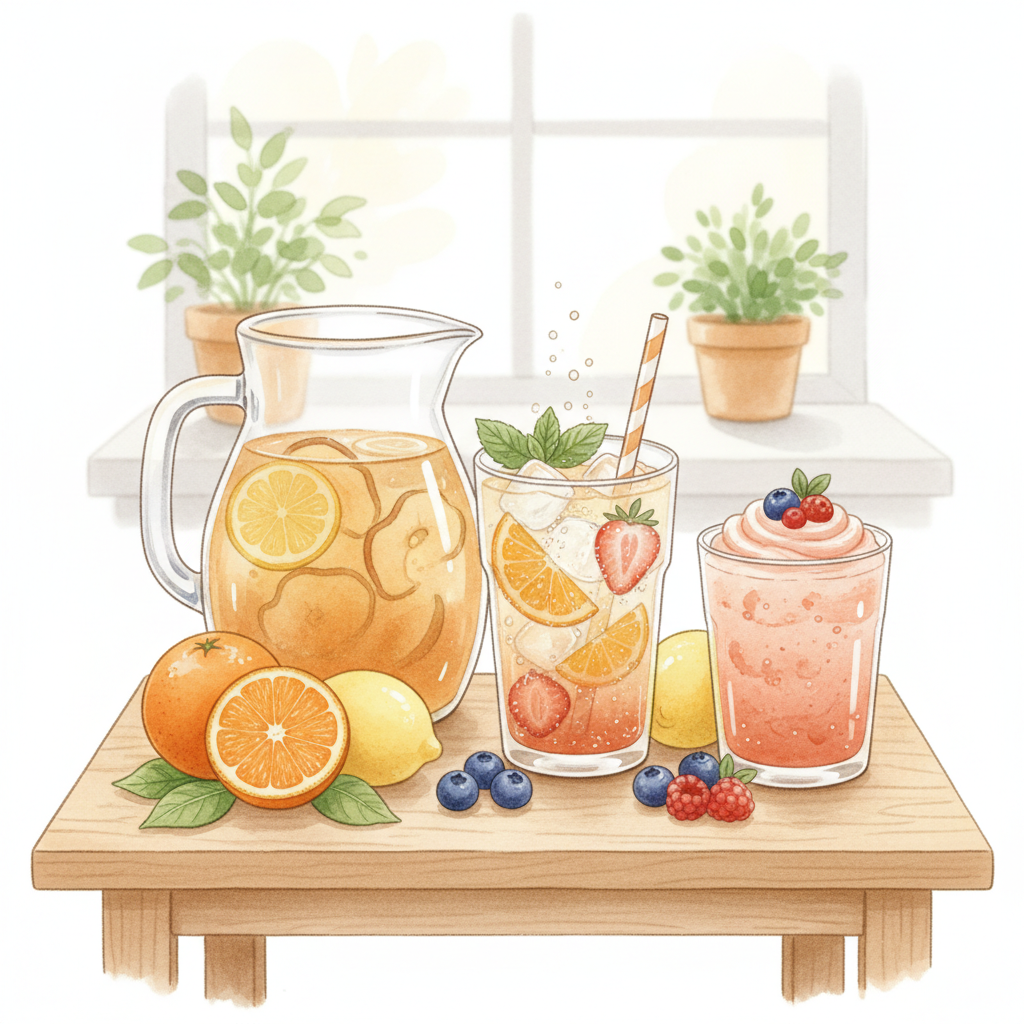
There’s something truly magical about watching a young child carefully pour ingredients into a glass, stir with focused concentration, and then beam with pride as they offer you a drink they made all by themselves. In the Montessori approach, preparing beverages is so much more than a fun kitchen activity — it’s a rich practical life experience that builds coordination, sequencing skills, independence, and genuine confidence. Today, I’m sharing some of our favorite drink recipes that children can prepare with minimal adult assistance, along with tips to set them up for success.
Why Beverage Preparation Is Perfect Practical Life Work
Maria Montessori observed that children have a deep, intrinsic need to participate in the real activities of daily life. Preparing drinks satisfies this need beautifully. When a child measures, pours, stirs, and serves a beverage, they are practicing fine motor control, mathematical thinking (measuring and counting), reading comprehension (following a recipe), and social grace (serving others). These are the same foundational skills we nurture across all practical life activities for toddlers — and beverage preparation is one of the most accessible ways to begin.
Children as young as two can start with simple pouring work using water, and by ages three to six, most children are ready to follow multi-step drink recipes with real ingredients. The key is preparing the environment thoughtfully so your child can work as independently as possible.
Setting Up the Environment for Success
Before introducing any recipe, take a few minutes to prepare the environment for your child. This means gathering all ingredients and tools in advance, placing them at your child’s height, and arranging them from left to right in the order they’ll be used. A small tray helps define the workspace and contains spills — which will happen, and that’s perfectly okay. Spills are learning opportunities, not mistakes.
Investing in child-sized tools makes an enormous difference. A Montessori-style child-size pitcher with a comfortable handle allows small hands to pour with control and precision. Similarly, a set of kids’ measuring cups with clear markings helps children measure ingredients accurately while reinforcing early math concepts. When the tools fit their hands, children can truly own the process.
Delicious Drink Recipes for Young Children
1. Classic Lemonade (Ages 3+)
This is a wonderful first recipe because it involves squeezing, measuring, stirring, and tasting — a full sensory experience.
- Cut 2-3 lemons in half (an adult can do this for younger children, or a 5+ child can use a wavy chopper).
- Show your child how to press and twist each lemon half on a citrus juicer.
- Measure 1/4 cup of lemon juice and pour it into a pitcher.
- Add 2 tablespoons of honey or maple syrup.
- Add 2 cups of cold water.
- Stir well with a long spoon.
- Taste and adjust — this is where the real learning happens! "Does it need more sweetness? More water?"
Tip: Encourage your child to serve the lemonade to family members. Pouring for others is a beautiful exercise in grace and courtesy.
2. Berry Smoothie (Ages 3+)
Smoothies teach sequencing and introduce children to the concept of layering ingredients in a specific order.
- Measure 1/2 cup of frozen berries (strawberries, blueberries, or a mix) and place them in the blender.
- Add 1/2 of a banana, broken into pieces by hand.
- Pour in 1/2 cup of yogurt.
- Add 1/2 cup of milk (dairy or plant-based).
- Place the lid on securely — an adult should check this.
- Press the blend button (with adult supervision) and blend until smooth.
- Pour into cups and enjoy!
Tip: Create a visual recipe card with photographs of each step. Even pre-readers can follow along independently using pictures. This is a wonderful extension of sequencing and ordering lessons you may already be doing.
3. Warm Honey Cinnamon Milk (Ages 2.5+)
This gentle recipe is perfect for cooler days and introduces children to the experience of preparing warm drinks safely.
- Measure 1 cup of milk and pour it into a small saucepan (an adult warms it on the stove or the child microwaves it for 30-45 seconds with supervision).
- Add 1 teaspoon of honey.
- Sprinkle a tiny pinch of cinnamon.
- Stir gently until blended.
- Pour carefully into a mug and let it cool slightly before drinking.
Tip: Even the youngest toddlers can handle the stirring and sprinkling steps. Meet your child where they are and let them contribute what they can.
4. Infused Water (Ages 2+)
This is the simplest recipe and a perfect starting point for very young children or those new to kitchen work.
- Fill a small pitcher with water.
- Choose fruits, vegetables, or herbs to add: cucumber slices, mint leaves, orange rounds, or strawberry halves.
- Drop the chosen ingredients into the water.
- Wait 10-15 minutes (a great lesson in patience!).
- Pour and enjoy.
Infused water also makes a lovely activity for hosting — your child can prepare it and serve guests, building confidence and social awareness.
Practical Tips for Guiding Your Child
- Demonstrate first. Give a slow, silent demonstration of each step before handing the work to your child. Let your hands tell the story.
- Resist the urge to correct. If the lemonade is too sour or the smoothie is lumpy, let your child discover this through tasting. Problem-solving is the goal.
- Include cleanup as part of the activity. Wiping the table, washing the pitcher, and putting tools away are all integral to the work — not an afterthought.
- Rotate recipes. Once your child masters one beverage, introduce another. You can build a whole sequence of kitchen activities over time as part of a broader practical life scope and sequence.
- Follow the child. Some children will want to make the same drink every day for two weeks. That repetition is purposeful — honor it.
The Bigger Picture
Every time your child prepares a drink independently, they are internalizing a powerful message: "I am capable. I can contribute. I matter." These simple recipes are building blocks for a lifetime of competence, self-reliance, and joy in nourishing themselves and others. Start with one recipe this week, set up that tray, step back, and watch the magic unfold. You might just find that the lemonade your three-year-old makes is the sweetest thing you’ve ever tasted — and not just because of the honey.