The Desert Biome
Published on: October 02, 2026
The Desert: Life in a Land of Little Rain
Deserts are some of the most surprising places on Earth. They look empty at first glance, yet they are full of clever plants and animals that have found ways to live with very little water. Children love the desert because it turns so many of their ideas upside down — a desert can be cold, a cactus can be a water tank, and many desert animals do all their living at night.
This lesson is a companion to our Biomes overview. It pairs with a free set of Desert Cards for matching and three-period lessons.
What Makes a Desert?
A desert is not defined by heat or by sand. It is defined by rain. A desert gets less than about 10 inches (25 centimeters) of rain or snow in a whole year — so little that the ground is dry most of the time.
That means some deserts are cold! The largest desert in the world is Antarctica, which is covered in ice but gets almost no new snow each year. The largest hot desert is the Sahara in northern Africa. Ask your child: if Antarctica is a desert, what do you think a desert really needs? (Very little rain.)
Deserts cover about a third of Earth's land. Take out a globe or world map and find a few together: the Sahara, the Gobi in Asia, the Australian Outback, and the Sonoran and Mojave Deserts here in North America.
Desert Landforms
Wind and the occasional hard rain shape the desert into beautiful forms. These are wonderful words to add to your child's geography vocabulary:
- Sand dune — a hill of sand piled up by the wind. The tallest dunes in North America are at Great Sand Dunes National Park in Colorado, where some rise more than 700 feet.
- Oasis — a green spot in the desert where water from underground reaches the surface, so palm trees and other plants can grow.
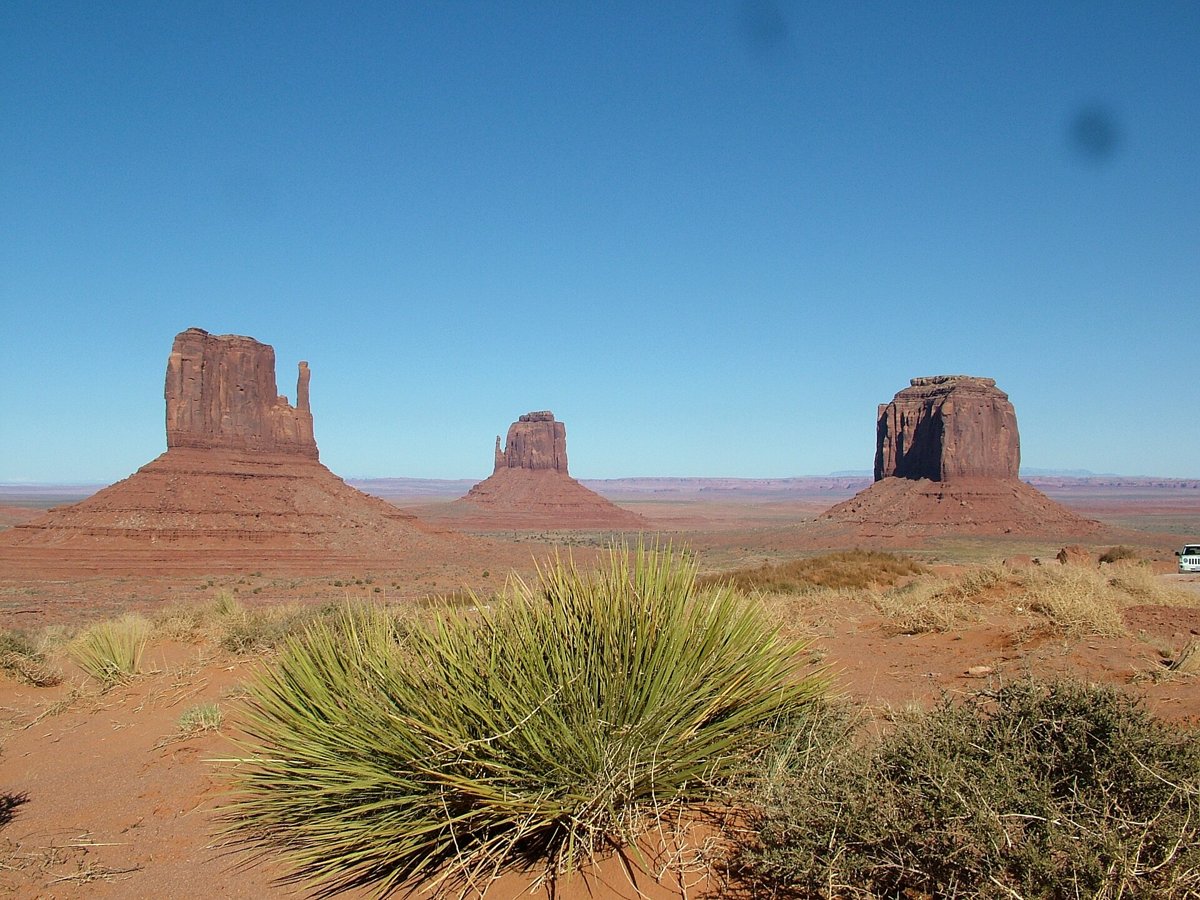
- Mesa and butte — flat-topped hills with steep sides. A mesa is wider than it is tall; a butte is taller than it is wide. Monument Valley on the Arizona–Utah border is famous for its buttes.
- Dry wash (also called an arroyo or wadi) — a stream bed that is dry most of the year but can fill quickly with rushing water after a storm.
How Desert Plants Save Water
Desert plants are masters of saving water, and each one has its own trick:
- A saguaro cactus stores water inside its thick, pleated stem, which swells like an accordion after a rain. Its spines shade the stem and protect it from thirsty animals. A saguaro grows very slowly and may not grow its first arm until it is more than 50 years old.
- Cactus skin is waxy, which keeps water from escaping into the dry air.
- Many desert plants have long or wide roots that catch every drop of rain before it disappears into the sand.
- Some desert wildflowers wait as seeds for years, then sprout, bloom, and make new seeds all in a few weeks after a good rain.
How Desert Animals Stay Cool
Desert animals avoid the heat and make the most of every drop of water:
- The fennec fox of the Sahara has enormous ears that let body heat escape, keeping it cool. It rests in a burrow during the hot day.
- The camel can go many days without drinking. Its hump stores fat, not water — a fun surprise for most children (and many grown-ups!).
- The desert tortoise spends most of its life in underground burrows, where it is cooler, and can store water in its body for months.
- Many desert animals are nocturnal — they sleep through the heat of the day and come out in the cool of the night.
Exploring the Desert at Home
- Three-period lesson with the cards. Print the Desert Cards on cardstock, cut them apart, and introduce three at a time: "This is a butte." "Show me the butte." "What is this?" Once your child knows them, make a second set for matching.
- The sponge experiment. Soak two sponges. Wrap one in wax paper and leave the other bare, and set both in a sunny window. Check them the next day. Which one is still wet? This is exactly why a cactus has waxy skin.
- A desert sand tray. Fill a shallow tray with sand and let your child build dunes, a mesa, and a dry wash, then pour a little water down the wash and watch it flow. Add small animal figures to make a desert scene.
- Care for a cactus. A small cactus or succulent is a lovely practical life job. Your child learns that desert plants want a sunny spot and only a little water, and that too much care can be too much.
- Day and night sort. Sort desert animals into those that are active by day and those that come out at night.
Free Desert Printout
Download this free Montessori-style printout for home or classroom use. Print on cardstock and cut apart for matching, sorting, and three-period lessons:
- Desert Cards — eight picture cards of desert landforms, plants, and animals.
- See our Biomes lesson for more free geography printouts, including the Arctic & Tundra Cards.
Recommended Materials
- Animals in Their Habitats — Biome Sorting Boards — Children sort illustrated animal pieces onto six biome boards, including a desert board.
- Geography Ecosystems Poster Set — Large, colorful charts of Earth's ecosystems, including the desert.