Turkey Fun, Tessellations, and Dolly Makeover: A Montessori Activity Newsletter
Published on: March 15, 2026
Welcome to Newsletter 18!
This newsletter is packed with hands-on activities perfect for the holiday season: fun turkey crafts, a toddler-friendly baby doll bath activity, a step-by-step dolly makeover, an introduction to tessellations and tangrams, and a food pyramid lesson with great book recommendations.
Turkey Crafts & Hats
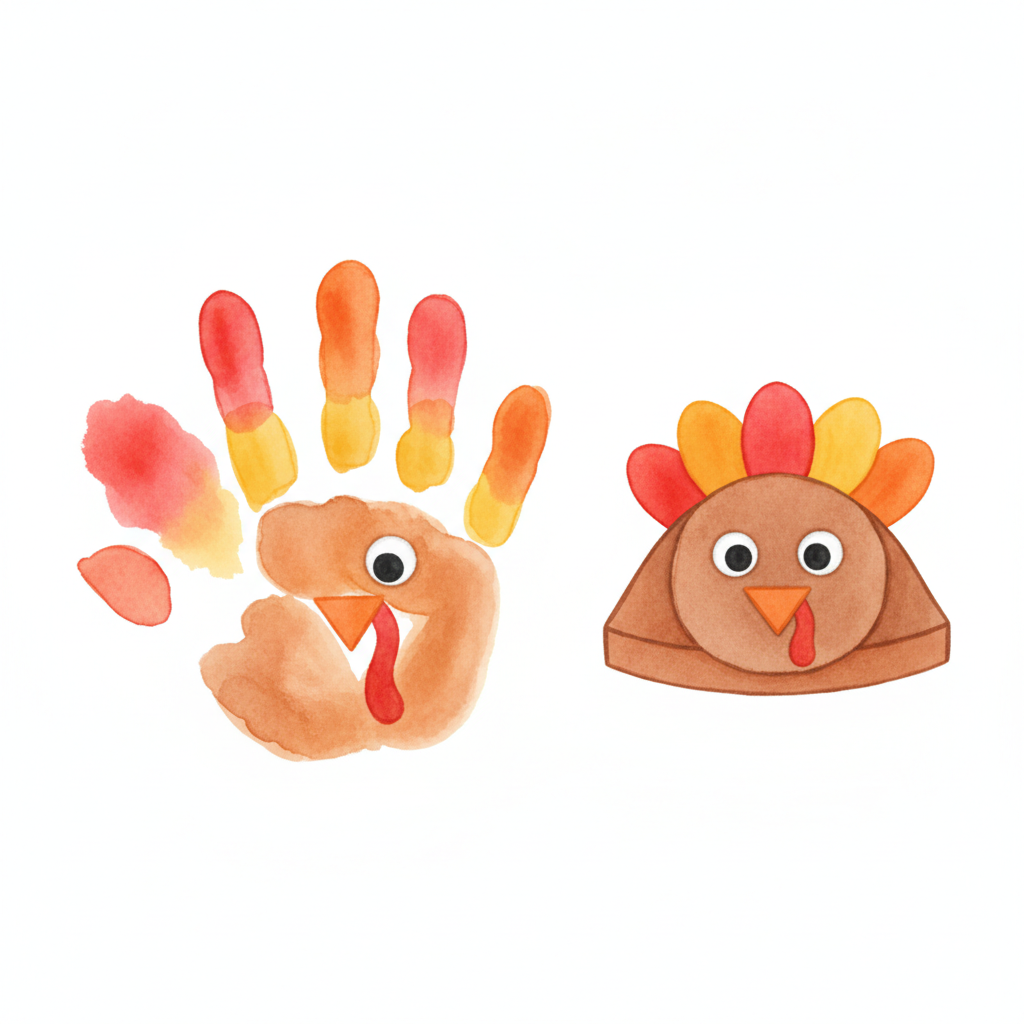
A hand-and-foot turkey makes a wonderful cutting project and decoration for young children. If your child is a beginner, you can help cut the more difficult parts, such as the fingers. Gluing the project together with a glue stick is great fun for a young child!
For extra holiday spirit, try making a fun turkey hat or a pilgrim hat and bonnet out of construction paper. These simple crafts build fine motor skills while getting everyone into the Thanksgiving mood.
Toddler Practical Life: Washing a Baby Doll
You can buy a plastic doll at a discount store or thrift shop for this wonderful water activity. This is a classic Montessori practical life exercise that builds coordination, concentration, and care for others.
What You Need
- One plastic baby doll (at least 10 inches long)
- 1 plastic tub — mark with a water line to prevent overflowing
- A large towel to place under the tub
- A pouring pitcher — draw a fill line on the outside with a marker
- A small plastic squirt bottle with a teaspoon of soap, filled with water
- One face flannel (washcloth)
- One hand towel
Optional: After the Bath
- A homemade cloth diaper with velcro sewn on for fastening
How to Present the Activity
- Show the child how to fill the pitcher to the line. Fill the pitcher two or three times to fill up the tub.
- Let your child squirt the liquid soap into the tub. If you are teaching them to count, let the children count: "Squirt the soap — one, two, three times."
- Carefully and slowly show the child how to cradle the baby doll's head. Wash the doll's arms, hands, fingers, legs, feet, and toes with the face cloth.
- After the bath, the child wraps the doll in the hand towel and dries it off. They can put a diaper on the doll.
- Show how to empty the bath water, dry the pitcher and tub, and find a place to put everything away.
- Have a floor cloth or mop ready to clean up any water off the floor.
Tip: We have the children put on plastic macs or rain coats when they do this activity!
Dolly Makeover
Your child can help with most of this project (the hair spray step needs to be done by an adult). Buy a baby doll that needs a makeover — thrift stores, yard sales, or even the bottom of your toy box can provide good candidates. Even a doll with a bad hair day can look great after your makeover!
5 Simple Steps
- Wash the doll in dish washing detergent. Use a small toothbrush for toes, fingers, ears, and other small areas.
- Wash the hair with conditioner and rinse well.
- Remove marks — if the doll has been drawn on, spray inexpensive hair spray on the markings, wipe clean, and wash the doll again.
- Style the hair — comb and brush the doll's hair. When styled, comb sugar water into the hair (mix 1 tablespoon of sugar into ¼ cup of warm water). Cover the head with a nylon stocking and leave it on until the hair is dry. This may take several days, but the doll's hair will be smooth and beautiful.
- Make a new outfit — sew a simple doll dress using a T-shirt pattern and add a ribbon belt. Have fun dressing your "new" doll!
These makeover dolls make wonderful gifts.
Shapes That Tessellate
A shape that tessellates can fit together with other shapes to make a pattern with no gaps or overlaps.
Honeycombs are made of hexagons that tessellate together to create a strong structure for storing honey. Your floor tiles tessellate in a pattern too! Many cultures throughout history — from Rome to Persia to Arabia — have used tessellations to create beautiful decorative art.
Shapes to Explore
Try printing and cutting out these basic shapes to see how they tessellate:
- Squares
- Triangles
- Diamonds (rhombuses)
- Hexagons
Tangrams
Tangrams are ancient Chinese puzzle shapes that can also be used to explore tessellations. A traditional tangram set consists of a square cut into five triangles, a square, and a rhomboid. These pieces can be arranged to make many different patterns and figures.
You can print tangram templates or make your own from craft foam or construction paper. Tangram activities help children explore geometry, spatial reasoning, and pattern-making.
For more advanced work, explore how tessellations connect to the Geometric Cabinet materials in the Montessori classroom.
Related Printout: Geometric Cards — Circles (PDF) | Shape Reading Cards (PDF)
The Food Pyramid
Food is the main topic during the holidays, making it a perfect time to teach about cooking and healthy eating. Help children explore the food groups by cutting out pictures of food from old magazines and sorting them into the different food pyramid compartments.
Recommended Books About Food
The Edible Pyramid: Good Eating Every Day by Loreen Leedy
The author uses the USDA Food Pyramid to show children how to eat healthy. The setting is a restaurant where patrons learn how many servings they need from each food group. The food illustrations look delicious!
The Kids' Around the World Cookbook by Deri Robins
This cookbook features easy recipes from around the world. Favorites include hummus from Turkey and pizza from Italy — a great cookbook for parents and kids to enjoy together.
The Kids' Multicultural Cookbook: Food & Fun Around the World by Deanna Cook
Recipes from 41 different countries across Asia, Africa, and Europe. The recipes are exciting and different — including peanut butter soup!
Poem Stew by William Cole, illustrated by Karen Weinhaus
Fun poems about food that will tickle your child's sense of humor.
Question Corner
What type of toys should I provide for my preschool-aged child?
Dr. Montessori developed materials that were attractive to the child rather than the adult. She believed children learn best through experimentation, and that they need to practice activities often to develop control of their movements. This gives children a sense of order and accomplishment.
Montessori also believed that each child should have items suited to their unique development and personality. Educational toys are wonderful, but you can also provide real activities such as practical life skills. Music, singing, art, physical activity, and drama should all be considered for your child's unique personality.
Talent is still in the cocoon stage during the preschool years, but exposure to different activities will help you discover your child's special talents.
Have a wonderful Thanksgiving!