Maps of Earth Surface
Published on: October 20, 2013
Exploring Maps: A Montessori Journey Across the Earth's Surface
Children are born explorers. From the moment they begin to crawl, they are mapping their world — learning what is near and far, what is up and down, what is land and what is water. In Montessori education, we honor this natural drive by introducing geography early and concretely, inviting children to hold the world in their hands before they ever read about it in a book.
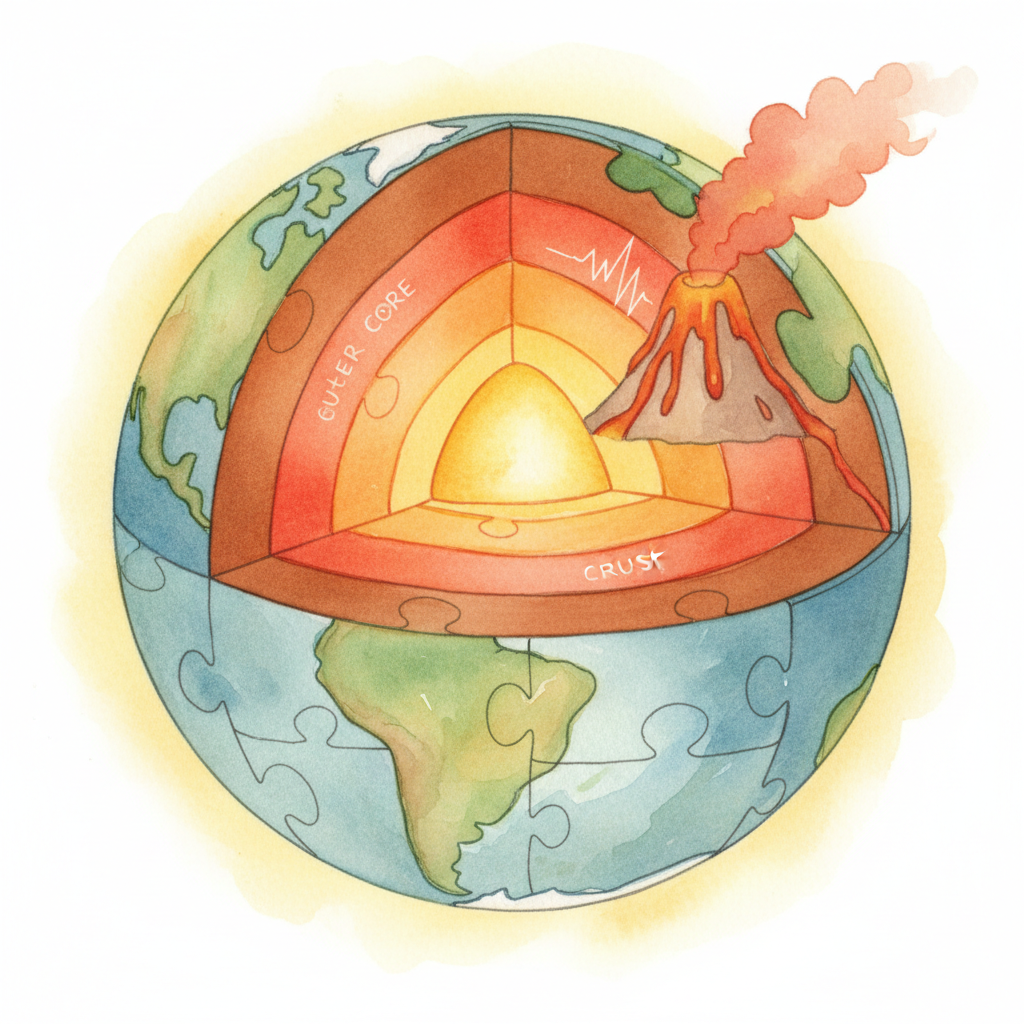
Maps are one of humanity's oldest and most fascinating tools, and they hold a special place in the Montessori classroom. Let's explore the history of cartography, the Montessori approach to geography, and hands-on activities you can bring into your home.
A Brief History of Cartography
Humans have been making maps for thousands of years. Ancient Babylonians carved simple maps into clay tablets. Greek scholars like Eratosthenes calculated the Earth's circumference with remarkable accuracy. During the Age of Exploration, European cartographers created increasingly detailed maps of coastlines and continents. And today, satellites and digital technology allow us to view the Earth's surface in stunning detail.
Sharing this history with your child — even in simple terms — helps them understand that maps are living documents, created by curious people who wanted to understand the world. This mirrors the Montessori belief that knowledge is not static; it is discovered, refined, and shared across generations.
The Montessori Approach to Geography
Maria Montessori introduced geography through a beautiful concrete-to-abstract progression. Young children begin with what they can see and touch, and gradually move toward more symbolic representations:
- The Globe: A child's first map is the globe — a three-dimensional, tactile representation of the Earth. The Montessori sandpaper globe, with its rough land and smooth water surfaces, allows even toddlers to "feel" geography. Our geography activities page has more ideas for this foundational work.
- Puzzle Maps: Next come the wooden puzzle maps — a flat representation of the globe that children can take apart and reassemble. Each continent is a separate piece that can be traced, named, and explored. Visit our geography printouts page for printable resources and extension activities.
- Flat Maps and Atlases: As children mature, they work with printed maps, atlases, and eventually create their own maps — labeling countries, rivers, mountain ranges, and more.
Land and Water Forms
One of the most beloved Montessori geography activities is the study of layers of the Earth. Children learn pairs of opposites — island and lake, peninsula and gulf, cape and bay — using small trays filled with clay and water. This hands-on work makes abstract geographic concepts tangible and memorable.
You can extend this at home by creating your own land and water form trays using modeling clay and a baking dish. Pour water in to reveal the forms, and watch your child's face light up with understanding.
Hands-On Map Activities for Home
Here are some simple, Montessori-aligned activities you can try:
- Map tracing: Place a piece of tracing paper over a puzzle map piece and let your child trace the outline of each continent. Label it together.
- Pin maps: Using a printed map and small flag pins, mark places your family has visited, where relatives live, or where favorite animals are found.
- Treasure maps: Older children love creating maps of their own backyard, bedroom, or neighborhood. This is a wonderful introduction to scale, direction, and spatial reasoning.
- Geography folders: Create a folder for each continent and fill it with pictures, flags, animal cards, and facts your child discovers over time.
Materials You Might Find Helpful
A beautifully crafted Montessori world map puzzle gives your child a hands-on way to learn continents and countries — and it's a material they'll return to again and again. Pair it with a globe for children and you have the foundation for years of geographic exploration.
Geography is one of the great gifts of a Montessori education — it opens a child's heart to the beauty and diversity of our world. Start with the globe in their hands, and watch their curiosity stretch to every corner of the Earth.