Lesson of the Day 37: Baby Activities — Keeping Little Ones Amused (5-8 Months)
Published on: April 12, 2026
Baby Activities — Keeping Little Ones Amused (5-8 Months)
...b, b, b the baby sound, B makes a babble sound!
Babies have such unique personalities! Some are calm observers, while others are busy explorers who sometimes seem bored. Here are wonderful Montessori-inspired activities for babies between 5 and 8 months — the age when they're becoming increasingly aware of the world around them and eager to interact with it.
Recommended Materials
- Baby Montessori Sensory Toys (0-12 Months) — A complete set of teething and sensory toys that develop fine motor skills and tactile, visual, and auditory senses.
- Montessori Toys for Babies 6-12 Months — Includes a tissue box toy, sensory balls, and stacking elements for open-ended exploration.
Sensory Exploration
At this age, babies learn about the world through their senses — touch, sight, sound, and taste. Every new texture, sound, and visual experience is building neural pathways!
- Texture Discovery: Cut pieces of different textured fabrics — velvet, silk, corduroy, burlap, fleece, cotton. Let baby hold, feel, and observe each one. Name the textures: "This one is smooth. This one is bumpy." This builds tactile discrimination, a foundation for later Montessori sensorial work.
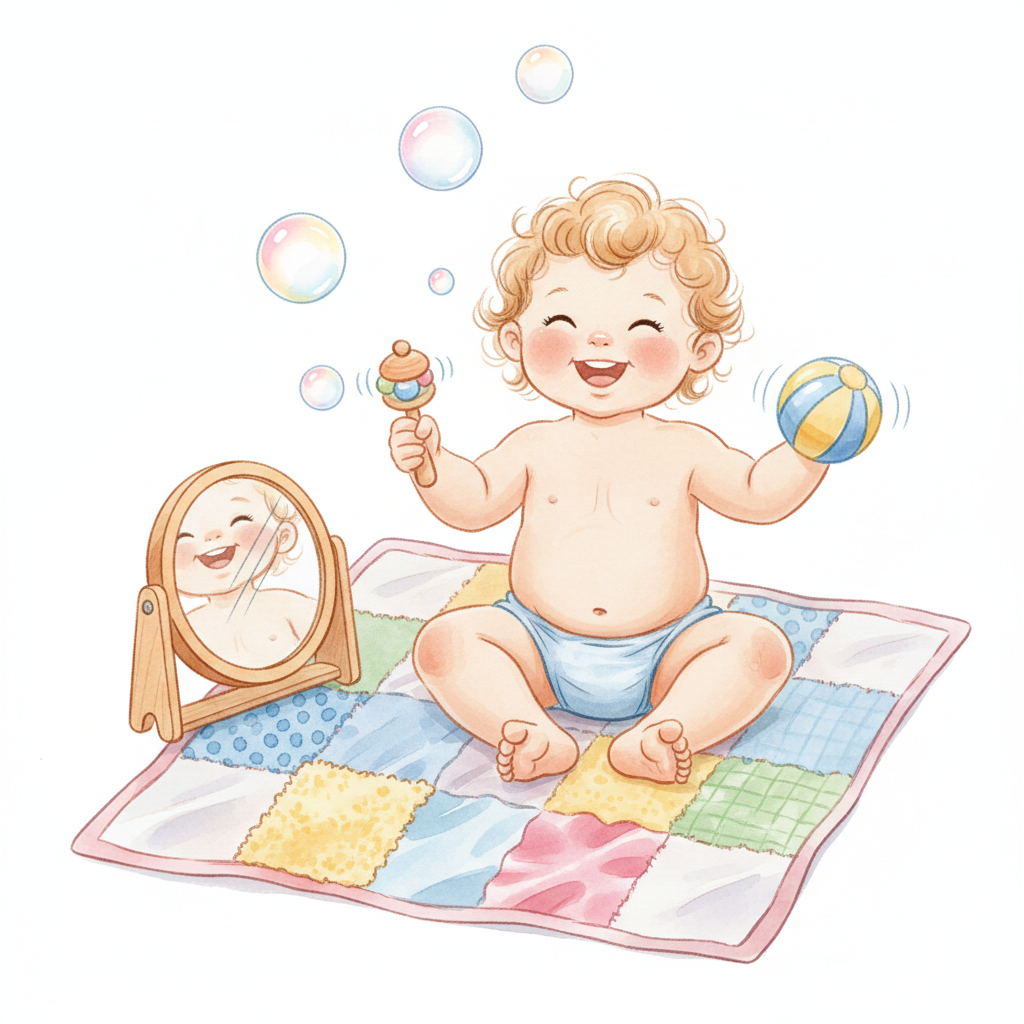
- Mirror Play: Even a 5-month-old baby will enjoy seeing herself in a mirror! Montessori infant environments always include a low mirror. Hold a baby-safe mirror in front of your baby and watch their fascination. Say their name and point: "There's [baby's name]!"
- Bubbles: Blow bubbles for your baby to watch. They'll track the bubbles with their eyes, reaching out to pop them as they get older. This builds visual tracking and hand-eye coordination.
- Light Play: Change the lighting in a room. Turn on a lamp, then turn it off. Open the shade to let in light, then close the shade. Your baby will notice the difference — they're learning about cause and effect!
Sound and Language
Babies at this age are making beginning sounds of words — "ma ma," "ba ba," "da da." They are laying the groundwork for language!
- Music Time: Play different types of music. You might be surprised what your baby responds to — one family's baby loved Patsy Cline! Classical, jazz, folk, world music — expose your baby to a variety of sounds and rhythms.
- Sing to Your Baby: They don't care how you sound! Singing is one of the most powerful bonding and language-building activities. Lullabies, nursery rhymes, made-up songs about what you're doing — it all counts.
- Talk Back: When your baby babbles, speak their language back to them! If they say "ba ba," respond with "Ba ba! Yes, ba ba!" This teaches the rhythm of conversation — one person speaks, the other listens and responds.
- Finger Plays: Do simple finger plays like "Pat-a-Cake" and "This Little Piggy." Touch your baby's hands and toes while you recite them. These combine language, rhythm, touch, and social interaction.
Movement and Physical Development
- Grasping Practice: While your baby is lying down, hold objects over their face area and encourage them to grasp at them. Use safe objects of different sizes and weights — a rattle, a soft ball, a plastic ring. This builds reaching, grasping, and hand strength.
- Safe Object Exploration: Let your baby hold many safe objects — plastic cups, balls, rattles, wooden spoons. They will explore with their hands and tongues (everything goes in the mouth at this age!). Each object teaches weight, texture, temperature, and shape.
- Bath Time Movement: Encourage your baby to splash, kick legs, and move arms during bath time. As they get older, say "kick!" when they kick and "pull!" when they pull their arms through the water. Comfort in water at this age helps with swimming later.
- Baby Wearing: Carry your baby around with you in a front or back carrier. Babies love being part of your daily activities — vacuuming, putting away items, walking outside. They observe everything you do, absorbing the rhythms and routines of daily life.
Early Problem-Solving
- Baby Treasure Hunt: Partially hide a stuffed animal or ball under a blanket. Ask, "Where is the ball?" Find it and say, "There it is!" This teaches object permanence — the understanding that things still exist even when they can't be seen. You can make this more complex as your baby matures. Soon your baby will find the hidden toys on their own!
The Most Important Thing
Most of all, enjoy each other's company. The best "activity" for a baby is a present, attentive caregiver who responds to their cues, follows their interests, and creates a safe environment for exploration. Every moment of connection — eye contact, a smile, a gentle touch — is building the foundation for all future learning.
See also: Montessori Baby — From Birth to 12 Months for a comprehensive guide to infant development, and Practical Life for activities that grow with your child.
Disclosure: Some links on this page are affiliate links. As an Amazon Associate, MontessoriMom earns from qualifying purchases. This costs you nothing extra.