Lesson of the Day 31: Sprouts and Grow It Again — Gardening Science for Kids
Published on: April 09, 2026
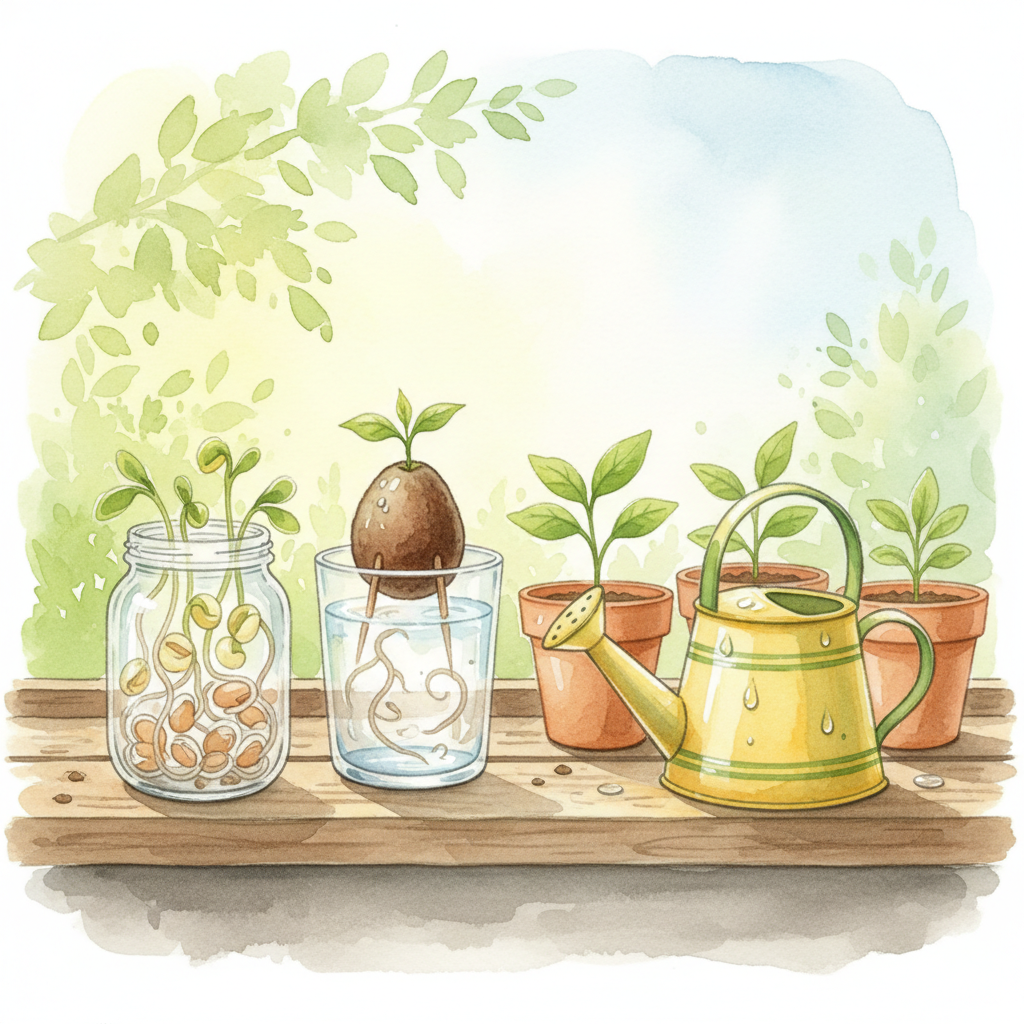
Sprouts and Grow It Again — Gardening Science for Kids
...g, g, g the growing sound, G makes a garden sound!
I love farming and gardening! Whether it's sprouting radish and broccoli seeds for a salad or growing pots of baby lettuce year round, there's something magical about watching plants grow. This lesson is packed with hands-on experiments that let children observe the miracle of plant growth — from bean sprouts to avocado trees to kitchen-scrap gardens.
Recommended Materials
- Root Viewer Kit for Kids — Includes 6 seed varieties and a clear window so children can watch roots grow underground in real time. A perfect STEM science kit for ages 5-12.
- Plant Growth Cycle with Flash Cards — 3D figurines showing the life cycle stages of plants with matching cards. Great for the three-period lesson and sequencing activities.
- Grow It Again (Kids Can Do It) by Elizabeth Macleod — A beautifully illustrated book with step-by-step instructions for growing plants from kitchen scraps, plus tasty recipes. Perfect for ages 8 and up.
Free Printouts
- Root Nomenclature Cards — Science reading cards about different types of roots
- Wildflower Cards — Identification cards for common wildflowers
Experiment 1: Bean Sprout Science
This is a classic Montessori science experiment that teaches observation, measurement, and the scientific method.
What you need:
- 6 dried beans (lentils, navy beans, or any beans from your kitchen cupboard)
- Wet paper towels
- Plastic bags (zip-lock bags work great)
- A magnifying glass
The experiment:
- Place beans on wet paper towels inside plastic bags
- Make several bags and put them in different environments:
- Dark and warm (inside a cupboard)
- Cold and dark (in the refrigerator)
- Sunny and warm (on a windowsill)
- Sunny and cold (by a window in winter)
- Observe daily with a magnifying glass
- Use the three-period lesson to introduce new vocabulary: germination, root, stem, leaf, sprout
Advanced extensions:
- Measure the growth of the stem and roots daily
- Draw and label the bean plant — stem, root, leaf
- Graph the differences in plant and root growth according to environment
You can also try sprouting popcorn seeds — children are amazed that popcorn can grow into a plant!
Experiment 2: Grow an Avocado Tree
This is one of the most satisfying "grow it again" projects — turning kitchen waste into a beautiful plant.
What you need:
- An avocado pit from a ripe avocado
- A jar or glass
- Water
- 3-4 toothpicks
Steps:
- Clean off the avocado pit
- Push at least 3 toothpicks around the center of the pit
- Fill a jar or glass with water
- Place the flat bottom of the pit about half an inch into the water, suspended by the toothpicks resting on the rim
- Put in a warm place with indirect sun
- Change the water weekly
- When the roots are about 4 inches long, pot the avocado plant in soil!
Children love watching the pit slowly crack open and the root emerge. This can take 2-6 weeks — a wonderful lesson in patience.
Experiment 3: Grow It Again — Kitchen Scrap Gardens
You can grow plants from food scraps that would normally go in the trash! Try these:
- Sweet potatoes — Suspend in water like the avocado pit. Beautiful vine-like plants will grow!
- Pineapple — Cut the top off a pineapple and plant it in soil. With patience, it can grow a new pineapple.
- Garlic — Plant a clove in soil and watch it sprout green shoots
- Carrot tops — Place the top of a carrot in a dish of water and watch the green leaves regrow
- Mango — Remove the seed from the husk and plant in soil
For more ideas and step-by-step instructions, the book Grow It Again by Elizabeth Macleod is a wonderful guide with beautiful illustrations and recipes.
Potato Maze: For a fun challenge, place a potato in a dark box with a small hole. The potato sprout will find its way toward the light through the hole — a wonderful demonstration of phototropism (plants growing toward light)!
Experiment 4: Build a Terrarium
A terrarium is a miniature garden in a glass container. It's a self-contained ecosystem that teaches children about the water cycle, soil, and plant needs.
What you need:
- A clear glass jar or fish bowl
- Small rocks or pebbles for drainage
- Activated charcoal (optional, helps keep it fresh)
- Potting soil
- Small plants (ferns, moss, or small succulents work well)
Layer the materials: rocks on the bottom, then charcoal, then soil. Plant your small plants, mist with water, and observe. A closed terrarium creates its own water cycle — water evaporates from the soil, condenses on the glass, and drips back down!
Composting with Worms
I'm hooked on composting! We love our worm factory. We started small but now have 3 levels of worms. They take care of kitchen scraps and newspaper, and you get the best soil fertilizer in the world.
A small worm composter is a wonderful classroom or home project. Children learn about decomposition, ecosystems, and the cycle of nutrients. Feed the worms fruit and vegetable scraps, coffee grounds, and shredded newspaper. Avoid meat, dairy, and oily foods.
Plant Science Vocabulary
Use the three-period lesson to introduce these important concepts:
- Parts of a flower: petals, stamen, pistil, sepal
- Parts of a plant: root, stem, leaf, flower, fruit, seed
- Photosynthesis: How plants use sunlight, water, and carbon dioxide to make food
- Germination: When a seed begins to sprout
- Bulb plants: Tulips and irises are great to dissect — children can see all the parts inside
Advanced topics for older children:
- Photosynthesis — How plants convert light energy into food
- Geotropism — How roots grow downward toward gravity
- Phototropism — How plants grow toward light (demonstrated by the potato maze!)
- Plant cells — Look at a plant cell under a low-powered microscope
Just for Baby
Take your baby with you when you're in the garden! A front or back baby sling is perfect for gardening together. Babies love the sensory experience of being outdoors — the colors, smells, and textures of the garden are endlessly fascinating. You can even make a doll-sized sling so your toddler can carry their baby doll in the garden too!
Seed Saving and Starting
If you saved seeds from last fall, you can start seedlings in egg cartons. Put them on your windowsill and watch them take off! Save seeds from melons, pumpkins, and squash. Children can also make a seed necklace by stringing dried seeds — a fun practical life activity that connects gardening to art.
See also: Lesson 29: Nature Studies for more biology activities, and Lesson 28: Earth Science for understanding the soil and rock cycles that support plant growth.
Disclosure: Some links on this page are affiliate links. As an Amazon Associate, MontessoriMom earns from qualifying purchases. This costs you nothing extra.