Lesson of the Day 29: Nature Studies — Squirrels, Beavers, Frogs, and Snails
Published on: April 02, 2026
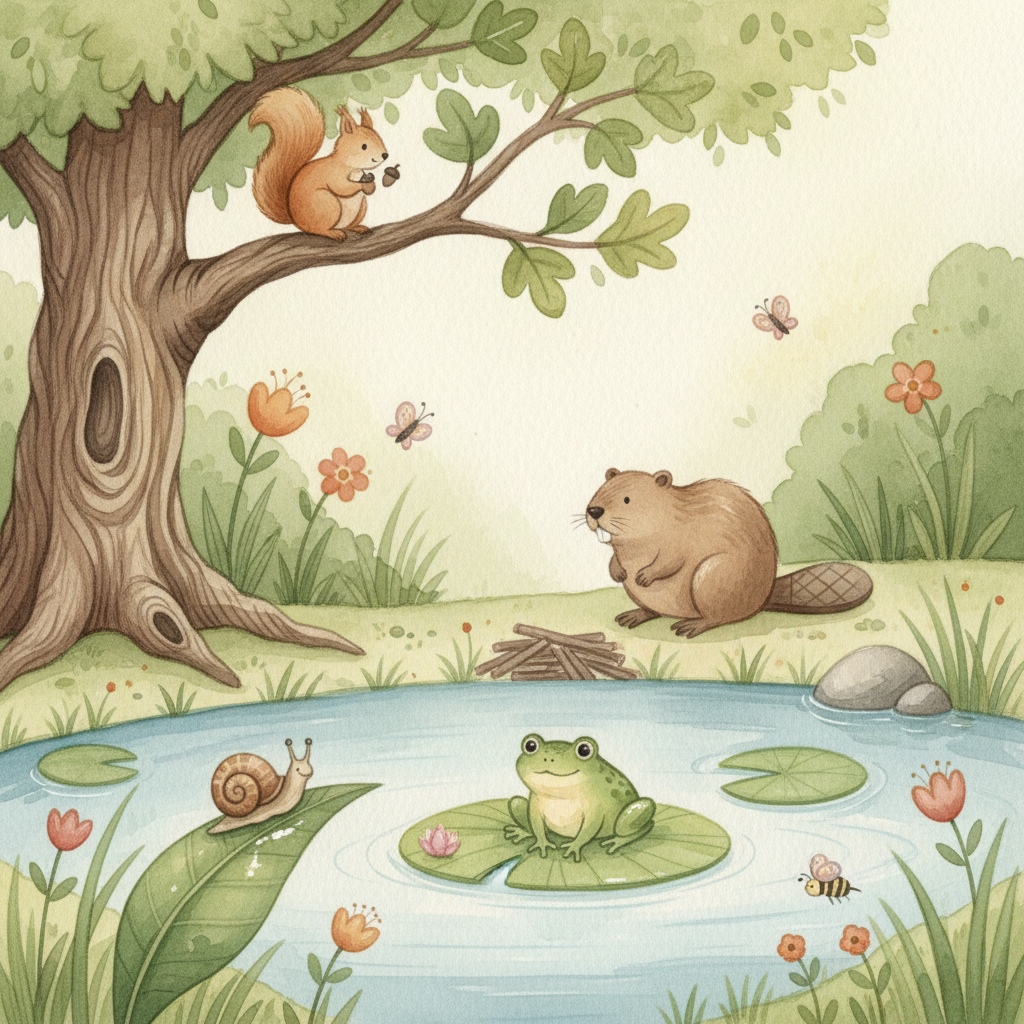
Nature Studies — Squirrels, Beavers, Frogs, and Snails
...n, n, n the nature sound, N makes a nature sound!
One of the most wonderful things about Montessori education is how it connects children to the natural world. This lesson explores four fascinating creatures that children can observe in their own backyards, ponds, and gardens. Each animal offers unique opportunities for biology, practical life activities, and hands-on science exploration.
Recommended Materials
- Montessori Life Cycle Animal Figurines Set — Plastic animal figurines including butterfly, frog, snail, ladybug, bee, and dragonfly life cycles with matching cards. Perfect for hands-on biology exploration.
- Life Cycle Animal Kit — 32 Piece Montessori Science Toy — Realistic 3D figurines with matching cards covering frog, butterfly, and more life cycles. Great for sequencing activities and the three-period lesson.
Free Printouts
We have seven free printable resources for this lesson:
- Squirrel Anatomy Nomenclature Cards
- Squirrel Food Three-Part Cards — Matching cards showing what squirrels like to eat
- Beaver Nomenclature Cards
- Beaver Largest to Smallest Cutouts — A sizing/sorting exercise
- Frog Life Cycle Sequence Cards
- Snail Nomenclature Cards
- Beaver, Tadpole & Squirrel Sorting Cards — Compare sizes across different animals
Part 1: Squirrels
Squirrels are wonderful subjects for a nature study because they live in so many of our backyards! There are about 270 species found almost everywhere in the world, except Australia and Antarctica. They are intelligent rodents who share our neighborhoods.
Three Types of Squirrels:
- Tree squirrels — The most common, including the Eastern and Western Gray Squirrels. They are diurnal (active during the day) and have a keen sense of smell for foraging food.
- Flying squirrels — They don't actually fly, but glide! These nocturnal squirrels live mostly in forests. Most species live in South Asia, but two species live in North America.
- Ground squirrels — This group includes chipmunks, prairie dogs, and groundhogs.
Squirrel Observation Activity
Take your child outside and look for squirrel nests in the trees. Look for large clumps of leaves, cloth, and grasses stuck between the branches. Keep a nature journal and record:
- What kind of squirrel did you see? (Gray, fox, or red?)
- What was it doing? (Eating, climbing, burying food?)
- Where was its nest?
- What food was it eating?
Use the Squirrel Anatomy Nomenclature Cards to teach the parts of the squirrel, and the Squirrel Food Cards to match foods with what squirrels eat.
Part 2: Beavers
The beaver is a semi-aquatic rodent that lives near forests with water — lakes, ponds, rivers, and streams. Beavers are found in North America, parts of Europe and Asia, and even southern South America.
Fascinating Beaver Facts:
- Beavers eat tree bark, new green plants, clover, berries, water plants, and sometimes algae
- In colder areas, beavers store large stacks of wood near their lodge for winter food. Aspen trees are a favorite!
- Beaver dams create ponds that provide water storage essential for plants, insects, and other animals — they are nature's engineers!
Beaver Activities
Dam Building Challenge: Collect sticks, small logs, leaves, and mud. Challenge your child to build a small "beaver dam" across a shallow stream or in a large tub of water. Can they stop the flow of water? This is a wonderful engineering and problem-solving activity.
Beaver Tail Bread: Make beaver tail-shaped bread as a cooking practical life activity. Roll dough into a flat oval shape like a beaver's tail, then bake or fry. Children can help measure, mix, and shape the dough.
Part 3: Frogs
A frog's life cycle is fascinating because it goes through amazing changes — a process called metamorphosis. Frogs live both in the water and on land, making them a perfect subject for studying adaptation.
The Frog Life Cycle:
- Eggs — Frogs lay clusters of eggs (frog spawn) in ponds and streams
- Tadpole — A tiny aquatic creature with a tail and gills
- Tadpole with legs — Back legs appear first, then front legs
- Froglet — The tail shrinks as lungs develop
- Adult frog — A fully formed frog that can live on land and in water
Frog Activities
Raise Tadpoles: In spring and summer, look for frog spawn in ponds. Place some in a fish bowl or aquarium, feed them, and watch the incredible transformation from tadpole to frog. This is one of the most memorable science experiences for children!
Frog Crafts: Make jumping paper frogs from folded paper — they actually hop when you press the back! This is a fun fine motor activity that also teaches about how frogs move.
Use the Frog Life Cycle Sequence Cards to practice ordering the stages of metamorphosis.
Part 4: Snails
Summer and spring are exciting seasons to observe snails in your garden! Snails hibernate during winter and emerge in spring. They can be found in water and on land, and they are truly fascinating creatures.
Snail Science:
- Snails belong to the Kingdom Animalia, Phylum Mollusca, Class Gastropoda
- Land snails have four tentacles — two long ones with eyes on them! Aquatic snails only have two tentacles.
- Snails have a big muscular foot that pushes along in a flowing movement, leaving behind a silvery trail
- They have a long tongue with sharp tooth-like edges for eating leafy vegetables non-stop
- The shell protects the soft-bodied snail from predators and weather
Snail Observation Activity
Capture and Study: Find a land snail in your garden — look under rotting vegetation or in leafy areas. Keep it temporarily in a jar with a mesh lid, along with lettuce or cabbage. Observe how it moves!
Snail Trail Experiment: Place the snail on a clear piece of glass or plastic. Watch how it moves and leaves a silvery path behind. Discuss: Why does the snail need this trail? (The mucus helps it glide smoothly and protects its soft body.)
Snail Cookie Recipe: Make snail-shaped cookies — roll dough into a long rope and coil it into a spiral snail shape. A delicious way to combine cooking practical life with biology!
Connecting the Animals
After studying all four animals, help your child compare and contrast them:
- Which animals live in water? On land? Both? (Beavers and frogs are semi-aquatic)
- Which animals hibernate? (Snails hibernate; squirrels are active year-round)
- Which animals build homes? (Squirrels build nests, beavers build lodges and dams)
- Which animal goes through metamorphosis? (Only frogs!)
- What do they all have in common? (They're all part of the natural world in our backyards)
See also: Lesson 27: Dinosaurs and Rocks for more hands-on science activities, and Lesson 28: Earth Science for exploring the earth these animals call home.
Disclosure: Some links on this page are affiliate links. As an Amazon Associate, MontessoriMom earns from qualifying purchases. This costs you nothing extra.